
What RV rental fees are and why the nightly rate is only the starting point
RV rental fees are charges added to the advertised nightly rate. The all-in RV rental cost can also include mileage, generator use, protection plans, taxes, cleaning, delivery, fuel, propane, and campground expenses.
Trip length matters because fixed fees weigh more heavily on short rentals. Route distance affects mileage and fuel, while RV usage can trigger generator or return-condition charges. Vehicle type, provider, and pickup location also influence the fee structure. Compare current RV listings and review RV rental types, then request a current itemized quote before booking.
Four types of charges to identify in an itemized quote
| Charge type | What it means | Common examples |
|---|---|---|
| Mandatory | Required for the booking | Service fee, booking fee, sales tax |
| Optional | Selected by the renter | Upgraded protection plan, pet option, delivery |
| Usage-based | Depends on actual use | Excess mileage, generator hours, fuel refill |
| Refundable | Returned if terms are met | Security deposit or card authorization |
A refundable deposit is not normally a trip expense unless the provider deducts documented charges. Keep it separate when calculating your budget, but make sure your available credit can cover the hold.
How RV type affects the fee structure
A Class A motorhome is a large drivable RV that may use more fuel and face size-related campground limits. A Class B camper van is compact and drivable. A Class C motorhome has a cab-over sleeping area and often balances space with easier handling.
A travel trailer requires a suitable tow vehicle, hitch equipment, and possibly a brake controller. A delivered RV rental is transported to a campsite, potentially adding delivery and setup fees but avoiding driving and towing. Policies vary by owner, fleet, and location, so confirm every line item and the current terms directly with the provider.
Mandatory booking charges, taxes, and rental-period rules
The checkout total may include charges that do not appear in the advertised nightly rate. Some are fixed, others are percentage-based, and tax treatment can vary by location and charge type. Review the itemized quote instead of assuming that a displayed subtotal is the final amount due.
Service fees, booking fees, and sales tax
A service fee or booking fee may cover platform operations, payment processing, customer support, or administration. Providers may calculate it as:
- A fixed dollar amount per reservation
- A percentage of the rental subtotal
- A combination of fixed and percentage-based charges
- A fee applied to the base rental plus selected extras
Sales tax and other applicable taxes may be calculated on the nightly rate, mandatory fees, protection plan, delivery, or another taxable subtotal. The rules and labels vary by provider and location.
Before paying, confirm whether the displayed total includes all mandatory service fees, booking fees, and taxes. Also ask whether adding mileage packages, delivery, equipment, or a protection plan will increase the taxable amount. A quote marked “estimated total” may still exclude usage-based charges incurred during the trip.
Minimum rental periods and fixed fees
A minimum rental period determines how many nights you must pay for, even if you use the RV for less time. For example, a provider with a 3-night minimum may charge three nights for a 2-night weekend. Pickup and return times do not necessarily convert those nights into full 24-hour periods, so verify the provider’s calculation.
Fixed charges make short rentals look more expensive on an effective-nightly-cost basis. Consider this hypothetical comparison using a $175 advertised nightly rate and $250 in one-time mandatory fees before taxes:
| Rental length | Base rental | Fixed fees | Subtotal | Effective cost per night |
|---|---|---|---|---|
| 3 nights | $525 | $250 | $775 | $258.33 |
| 7 nights | $1,225 | $250 | $1,475 | $210.71 |
| 14 nights | $2,450 | $250 | $2,700 | $192.86 |
| 30 nights | $5,250 | $250 | $5,500 | $183.33 |
This is a calculation example, not a local quote. It excludes taxes, protection, mileage, generator use, fuel, cleaning, and other possible costs. Use the RV Rental Cost Index for broader planning context, then obtain a current itemized quote for the exact vehicle and dates.
Weekly rental discounts and cancellation terms
A weekly rental discount may reduce the base rental price without changing fixed service fees, cleaning charges, protection-plan costs, taxes, or usage-based fees. Compare the full trip total, not just the discounted nightly rate. A seven-night booking can sometimes cost less per night than a shorter stay, but it is not automatically cheaper overall.
Check these terms before booking:
- The discount percentage and which nights qualify
- Whether fees are calculated before or after the discount
- The deposit and final-payment due dates
- Which payments or fees are nonrefundable
- Cancellation deadlines and refund percentages
- Rules for shortening, extending, or changing dates
- Whether weather, illness, or campground closure changes the policy
- Any minimum stay attached to holidays or high-demand dates
Prices, labels, payment schedules, and cancellation policies vary by owner, fleet, vehicle, and location. Ask the provider to confirm the current itemized quote and applicable terms in writing before submitting payment.
Mileage, generator, fuel, and campground costs
Usage-based costs depend on the route, driving habits, RV efficiency, and time spent without campground hookups. Estimate them separately from the advertised nightly rate, then add them to the itemized quote.
Estimate mileage overages before booking
A mileage allowance specifies how many miles are included, often per night or per rental. Any distance above that allowance may incur an excess mileage fee, commonly calculated per mile.
- Map the full route from pickup through return.
- Add campground detours, grocery runs, fuel stops, and sightseeing.
- Include a 10% mileage buffer for changed plans or missed turns.
- Subtract the total included mileage.
- Multiply the remaining miles by the quoted excess mileage fee.
Example: A 5-night rental includes 100 miles per night, providing 500 included miles. If the mapped route plus buffer totals 720 miles, the projected overage is 220 miles. At a hypothetical $0.50 per mile, that adds $110.
Confirm whether unused daily miles roll over, whether unlimited-mileage rental options or packages are available, and how the provider records pickup and return mileage.
Generator hours, fuel cost, and propane refill
Generator use may be unlimited, billed entirely by the hour, or include a daily allowance followed by an hourly charge. Ask whether included hours accumulate across the trip and whether the generator meter will be documented during inspection.
Fuel often costs more than renters expect. A large Class A may consume substantially more fuel than a compact Class B camper van, while a Class C generally falls between them. Calculate fuel with:
Trip miles divided by estimated MPG x expected price per gallon
For a hypothetical 720-mile route at 9 MPG, the RV would use about 80 gallons. At an assumed planning price of $3.50 per gallon, estimated fuel would be $280. Replace both assumptions with the vehicle’s expected MPG and current route-specific fuel prices.
Also confirm the required return fuel level. Some providers charge for missing fuel plus a service amount. Propane may power the furnace, stove, refrigerator, or water heater, and a refill charge can apply if the tank is not returned at the required level.
Campground fees, parking, and route-related expenses
These travel expenses are usually paid separately from the rental provider’s charges:
- Campsites; this guide uses $30-$100+ per night only as a manually maintained editorial planning band, not a verified average or live campground quote
- Electric, water, sewer, or resort charges
- Parking at attractions or overnight facilities
- Highway tolls, bridge charges, and toll-processing fees
- Dump-station access when not included with the campsite
- Size-related surcharges or access limits
Larger motorhomes may not fit every campsite, parking area, or road. Verify length, height, hookup type, and campground access before reserving. Prices and policies vary by vehicle, owner, fleet, route, and location, so confirm the current itemized quote and provider terms before booking.
Insurance, protection plans, and roadside assistance
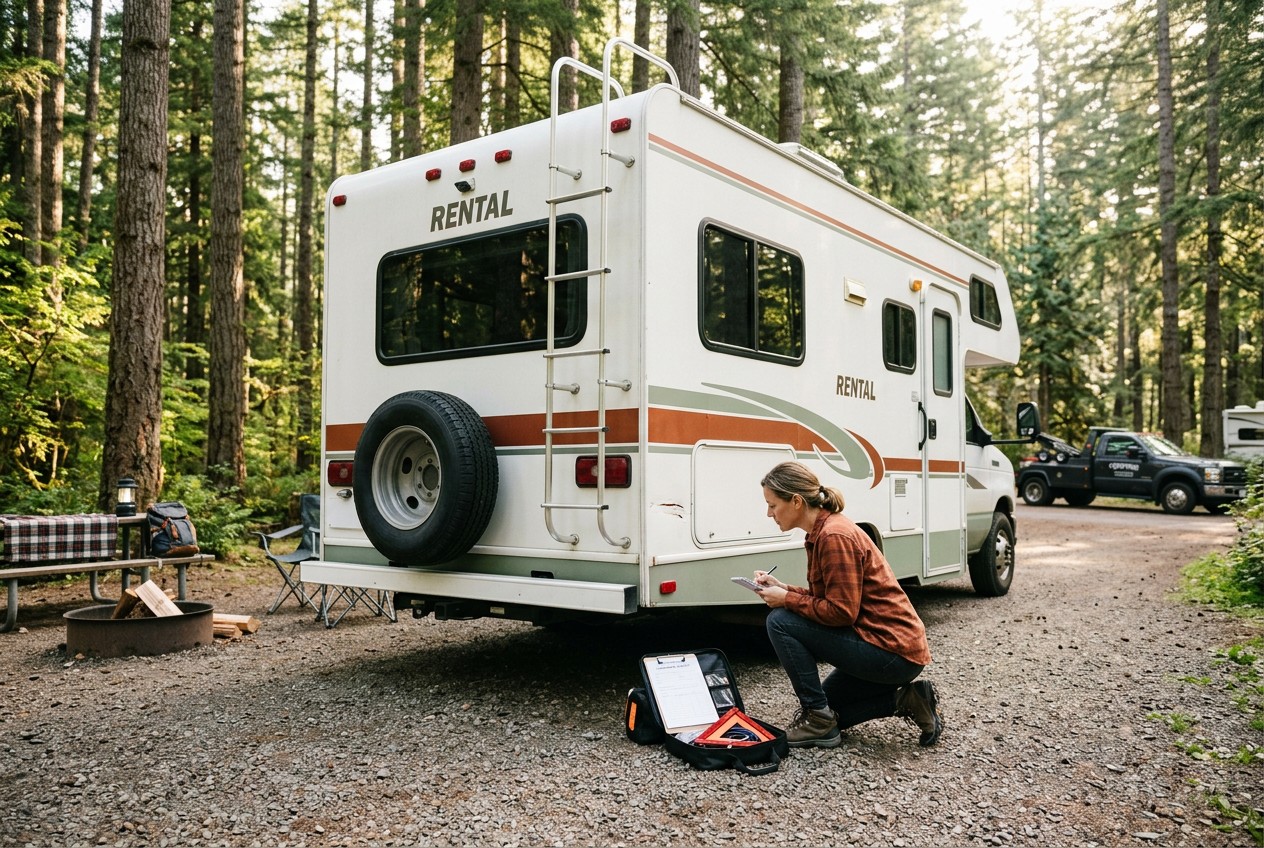
RV rental insurance coverage and a protection plan are not necessarily the same. Insurance may address specified liability, collision, or comprehensive losses, while a protection plan may be a contractual damage-waiver product with separate limits and exclusions. Neither automatically covers every driver, component, or incident.
What to verify in the coverage documents
Read the actual policy or plan documents, not only the checkout summary. Ask:
- What is the deductible for each type of claim?
- Are collision, theft, vandalism, fire, weather, and animal damage covered?
- Is supplemental liability included, optional, or unavailable?
- Are windshield, tire, wheel, roof, awning, undercarriage, and interior damage excluded?
- Does coverage apply on unpaved roads or during towing?
- Are personal belongings covered?
- Which drivers must be listed and approved?
- Are there age, license, or driving-history requirements?
- What actions could void coverage?
- How quickly must an accident or damage be reported?
Also confirm who pays repair costs initially and whether loss-of-use, administrative, towing, or diminished-value charges can be assessed. Compare the deductible and exclusions across current RV listings, since the least expensive protection option may leave the renter responsible for substantial costs.
Can personal auto or credit card coverage apply?
Do not assume your personal auto policy extends to a rented recreational vehicle. Policies may exclude RVs entirely, cover liability but not physical damage, or treat a Class A, Class B, Class C, and travel trailer differently.
Credit card rental benefits commonly focus on passenger vehicles and may exclude motorhomes, camper vans, trailers, vehicles above certain weights, or rentals exceeding a specified duration. Paying with the card does not prove that the RV qualifies.
Before declining provider coverage, contact the insurer or card benefit administrator. Provide the exact RV type, weight or class, rental dates, value, and intended use. Request written confirmation describing coverage limits, deductible, exclusions, and claim procedures.
What roadside assistance actually includes
Roadside assistance may provide towing, jump-starts, lockout help, fuel delivery, or tire service. Some plans cover only dispatch, leaving labor, replacement tires, fuel, or towing beyond a distance limit payable by the renter.
Confirm:
- Maximum towing distance or dollar limit
- Coverage for RV-specific tire service
- Availability in remote areas
- Support for a tow vehicle and travel trailer
- Trip-interruption or lodging benefits
- Out-of-pocket charges and reimbursement rules
Coverage terms and prices vary by provider, vehicle, and location. Obtain the current itemized quote and full policy documents before booking.
Cleaning, return-condition fees, and the security deposit
Return-condition fees usually apply when the RV does not meet the provider’s written return requirements. The refundable security deposit should be budgeted as a temporary card authorization or payment hold, not as a trip expense, unless documented deductions are made.
Cleaning, dumping, pet, and missing-equipment charges
A basic cleaning fee may be mandatory, but it does not always cover excessive dirt, stains, food spills, odors, or unwashed cookware. Ask exactly what you must clean before return.
Common renter responsibilities include:
- Removing food, trash, and personal belongings
- Washing dishes and wiping counters
- Sweeping floors
- Emptying the refrigerator
- Dumping and flushing black and gray water tanks
- Returning linens or equipment as instructed
Pet fees may be charged upfront or assessed after return if pets were not disclosed. Smoke-remediation charges can be substantial if smoking or vaping violates the rental agreement. Missing hoses, power cords, leveling blocks, keys, kitchenware, or safety equipment may also lead to deposit deductions.
Fuel, propane, and late-return requirements
Providers may require the fuel tank and onboard propane tank to be returned at specific levels. Failure to comply can trigger the replacement cost plus a refueling or administrative charge. Photograph the gauges at pickup and return.
A late-return fee may apply immediately after the scheduled time or after a stated grace period. Returning late can also disrupt the next booking. Build extra time into the final day for:
- Traffic and campground checkout
- Refueling and propane service
- Dumping waste tanks
- Interior cleanup
- The return inspection
Confirm the deadline, grace period, after-hours procedure, and charges for each unmet condition before departure.
Protect the deposit with inspection and documentation
Complete a rental inspection before driving away or accepting delivery. Use timestamped photos or video to record every side of the RV, roof-accessible areas if permitted, windows, tires, awning, interior surfaces, appliances, and existing damage.
Check the equipment inventory and document:
- Odometer and generator-hour readings
- Fuel and propane levels
- Waste-tank indicators
- Warning lights and appliance faults
- Scratches, stains, dents, or broken components
- Missing accessories or supplies
Send written notice of defects through the provider’s approved communication channel. Repeat the documentation during return and request confirmation that the handoff is complete.
Ask when the deposit hold will be released, how deductions are documented, and how disputes are handled. Cleaning standards, inspection procedures, deposit timelines, and fees vary by owner, fleet, and location, so confirm the current itemized quote and return terms directly with the provider before booking.
Delivery, setup, and travel trailer costs
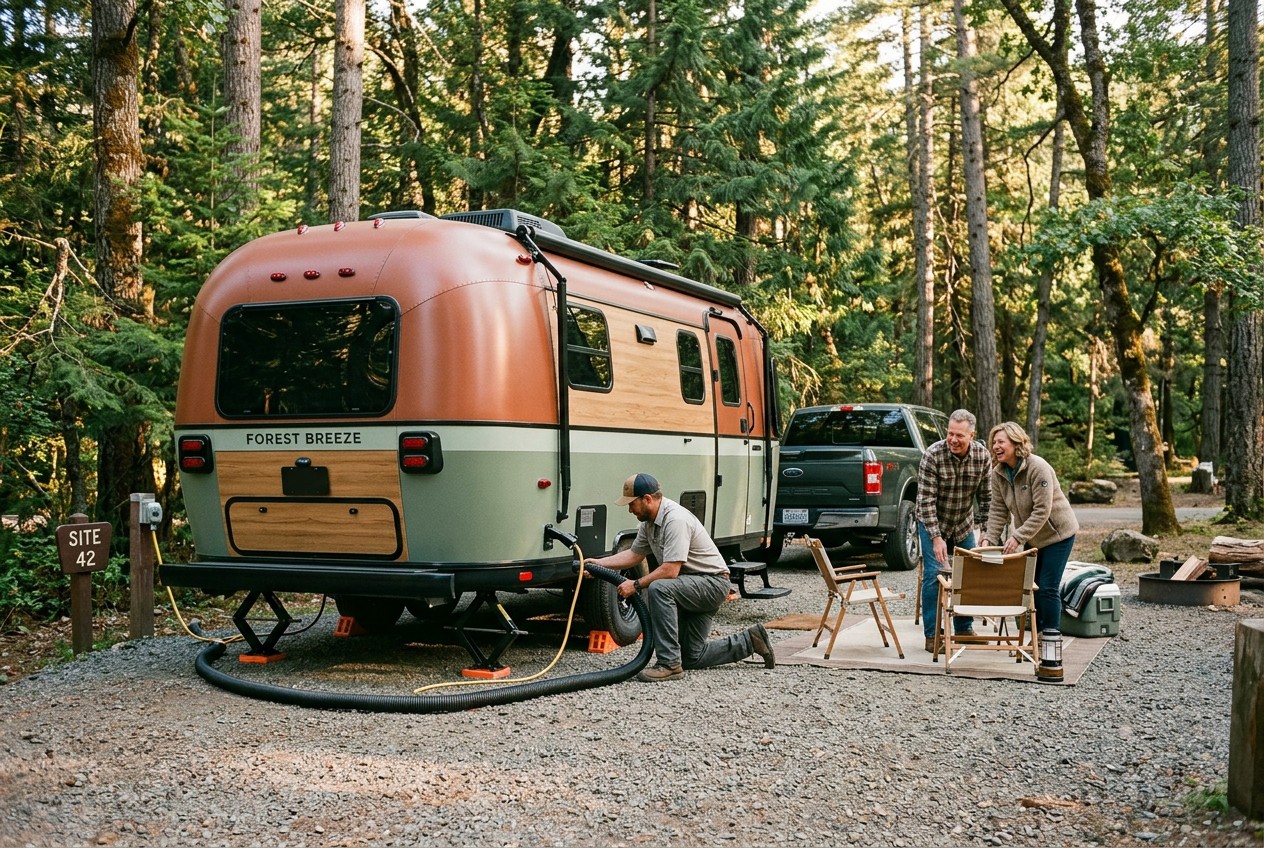
A delivered RV rental is transported to your reserved campsite and prepared for use. A travel trailer can instead be picked up and towed with a compatible vehicle. Both options have costs that do not apply in the same way to a drivable motorhome.
How delivery and setup pricing works
RV delivery may be priced by round-trip mileage, distance zone, or a minimum charge. Confirm whether the quoted distance is measured from the RV’s storage location to the campground one way or both ways.
Ask which services are included:
- Campsite delivery and pickup
- Leveling and stabilizing
- Electric, water, and sewer connections
- Interior orientation
- Teardown after the stay
- Waste-tank dumping
- Propane or generator preparation
Some providers combine delivery and setup into one fee, while others list them separately. Extra charges may apply for long distances, difficult access, waiting time, waste service, or campground check-in outside the provider’s delivery window.
Verify that the campground permits third-party RV delivery. Give the provider the site number, gate procedure, road restrictions, hookup details, check-in time, and maximum RV length. The renter may need to arrive before delivery or authorize campground staff to admit the provider.
Extra costs of towing a travel trailer
The tow vehicle must meet the trailer’s loaded weight, tongue-weight, hitch, and braking requirements. Published towing capacity alone is not enough because passengers, luggage, hitch equipment, and cargo reduce available payload.
Potential additional costs include:
- Receiver hitch and correct hitch ball
- Weight-distribution or sway-control equipment
- Electric brake controller
- Seven-pin wiring connection
- Extended towing mirrors
- Equipment installation or rental
Confirm the provider’s requirements and compare them with the vehicle manufacturer’s towing and payload limits. An incompatible hitch, insufficient payload, missing brake controller, or inadequate wiring can make the tow vehicle unsuitable.
When delivery may be cheaper than towing or driving
Compare the delivery and setup total against the complete pickup option, including fuel, projected mileage overages, towing equipment, campsite detours, and travel time. Delivery can be economical when the tow vehicle needs costly hardware or when the RV would otherwise be driven many extra miles.
The tradeoff is mobility. A delivered RV normally stays at the campsite, so it cannot serve as transportation for sightseeing or move easily between campgrounds.
Prices and policies vary by owner, fleet, vehicle, campground, and location. Before booking, confirm the itemized quote, delivery radius, setup scope, access requirements, cancellation terms, and refundable deposit directly with the provider.
Calculate and compare the true all-in trip cost
Worked example: nightly rate versus a short road trip total
A $175 advertised nightly rate becomes $700 for four nights, but that is only the starting point. Consider this hypothetical 600-mile Class C trip:
| Item | Calculation | Cost |
|---|---|---|
| Base rental | 4 nights x $175 | $700 |
| Mileage overage | 200 miles x $0.50 | $100 |
| Protection plan | 4 days x $35 | $140 |
| Service and booking fees | Hypothetical combined amount | $145 |
| Taxes | Hypothetical estimate | $90 |
| Cleaning fee | Fixed charge | $125 |
| Fuel | 600 miles at 10 MPG x $3.50 | $210 |
| Propane refill | Estimated usage | $25 |
| Campgrounds | 4 nights x $55 | $220 |
| Projected all-in trip cost | $1,755 |
The effective cost is $438.75 per night, not $175. This example is not a local quote and excludes generator overages, tolls, parking, food, and possible return-condition charges.
A hypothetical $1,000 refundable security deposit should be listed separately. It is a temporary hold or refundable payment unless documented deductions occur.
Itemized quote comparison worksheet
Use the RV Rental Cost Index for broader planning context, then enter each provider’s current terms:
| Quote detail | Option A | Option B |
|---|---|---|
| Base price and minimum nights | ||
| Included mileage and excess mileage fee | ||
| Generator allowance and overage rate | ||
| Service and booking fees | ||
| Protection plan and deductible | ||
| Taxes and cleaning | ||
| Delivery and setup | ||
| Refundable deposit | ||
| Cancellation terms | ||
| Fuel, propane, and campground estimate | ||
| Projected all-in cost |
Compare identical trip assumptions. A lower nightly rate can cost more if it includes fewer miles, carries higher fixed fees, or requires a more expensive protection plan.
Make a fair RV-versus-hotel comparison
Compare complete trip budgets, not one RV night against one hotel room. Include RV fuel, campsites, protection, fees, and parking. For the hotel option, include enough rooms for the same group, taxes, parking, a rental car or rides, and meals that could have been prepared in the RV.
Also consider sleeping capacity and convenience. The cheaper total may not be the best fit if it requires extra driving, separate rooms, or daily restaurant meals. Prices and policies vary by provider and location, so confirm the current itemized quote and terms directly before booking.
RV rental fee FAQ and pre-booking checklist
How much should I add to the advertised nightly rate?
Adding 20%-40% can provide a rough starting estimate, but it is not a reliable booking total. Fixed fees have a greater effect on short rentals, while long routes can create substantial mileage and fuel costs.
Build an all-in estimate using the exact rental period, mapped pickup-to-return mileage, included miles, excess mileage rate, generator policy, protection choice, taxes, cleaning, and expected campground expenses. RV type matters too. A large motorhome may use more fuel, while a travel trailer can require towing equipment. Confirm every figure in the provider’s current itemized quote.
Is a refundable security deposit part of the trip cost?
Usually, no. A refundable security deposit is commonly a temporary card authorization or refundable payment rather than a trip expense. Keep it outside the projected all-in cost, but ensure sufficient available credit or cash.
The provider may deduct documented charges for damage, excessive cleaning, missing equipment, fuel shortages, waste tanks, or late return. Confirm the deposit amount, payment method, release timeline, deduction process, and dispute procedure before paying.
What should I confirm before booking?
Use this checklist for each quote:
- Current itemized total, including mandatory fees and taxes
- Minimum nights and any weekly discount
- Included mileage, overage rate, and generator allowance
- Protection-plan cost, deductible, exclusions, and approved drivers
- Roadside-assistance services, limits, and out-of-pocket charges
- Cancellation, date-change, and refund terms
- Deposit amount, authorization method, and release timing
- Fuel, propane, cleaning, dumping, and return-time requirements
- Delivery distance, setup scope, or towing-equipment requirements
- Campground access, hookup, size, and delivery rules
Prices and policies vary by owner, fleet, vehicle, and location. Confirm the current itemized quote and provider-specific terms directly before booking.
Generator safety: Never operate an RV generator inside a vehicle, garage, shelter, or other enclosed or partly enclosed space. Follow the manufacturer’s clearance requirements, keep exhaust away from doors, windows, and vents, and verify that smoke and carbon monoxide alarms are working.
Fuel and propane safety: Follow the rental provider’s and manufacturer’s instructions, extinguish flames and other ignition sources, and use an authorized propane service when required. If you smell propane or suspect a leak, leave the area, avoid switches and flames, and contact the provider or emergency services from a safe location.
Wastewater safety: Empty black and gray water tanks only at authorized disposal facilities and in accordance with provider instructions and local regulations. Wear suitable disposable gloves, prevent splashes and cross-contamination, and wash your hands thoroughly afterward.
Towing safety: Confirm the tow vehicle’s payload, axle, tongue-weight, and towing limits using loaded weights, and verify the hitch, brakes, wiring, tires, mirrors, and safety equipment before departure. Licensing and towing-equipment requirements vary by jurisdiction, so check the rules that apply along your entire route.
Do not climb onto an RV roof unless the rental provider expressly permits it and safe access equipment and procedures are available.
Insurance, tax, and contract information in this article is general guidance, not legal, tax, or insurance advice. The signed rental agreement and applicable policy documents control; obtain written confirmation from the provider, insurer, or card benefit administrator for your specific rental.
Sources and verification
- FTC guidance on renting a car supports checking advertised prices, optional charges and coverage; its direct scope is rental cars, not RV-specific contracts.
- NAIC state insurance department directory links to official state regulators for insurance questions.
- USA.gov state motor vehicle services links to official state agencies for vehicle and licensing rules.
These sources support the consumer-comparison, insurance-regulator and state-rule context above. They do not validate any fee, deposit, rental rate, vehicle, provider, availability, protection plan or specific policy; verify the complete written quote and contract directly.