
What Does RV Rental With Unlimited Mileage Mean?
An RV rental with unlimited mileage generally lets you drive without paying a per-mile charge or mileage overage fee. That differs from “100 included miles per day,” “free miles,” or another fixed mileage allowance, where additional miles may cost extra.
What Unlimited Mileage Does and Does Not Include
Unlimited miles usually cover only the rental unit’s driving mileage. They do not automatically include:
- Fuel
- Generator hours
- Insurance or a protection plan
- Taxes and service fees
- Cleaning charges
- One-way drop-off or repositioning fees
- Delivery and setup
- A refundable security deposit
For example, a Class C motorhome may advertise unlimited miles at a nightly rate, but the all-in trip cost can still rise substantially after fuel and required fees are added.
Restrictions That May Still Apply
“Unlimited” does not necessarily mean unrestricted. The rental agreement may prohibit international travel, unpaved roads, certain remote regions, festivals, or specific routes. Providers may also set minimum or maximum trip lengths, require preapproved destinations, or limit driving to approved drivers.
Before booking, request a current itemized quote and read the mileage language carefully. Confirm geographic limits, road-use rules, generator charges, one-way permission, approved-driver requirements, and post-trip billing directly with the owner or fleet. Policies vary by vehicle, provider, location, and rental dates.
Unlimited Miles vs Other RV Mileage Plans
Mileage Plan Comparison Table
Mileage pricing can change the trip total more than the advertised nightly rate suggests. Compare each quote using your projected route mileage, included miles, and every potential overage charge.
| Mileage plan | Base pricing | Overage exposure | Best fit and flexibility | Questions to ask |
|---|---|---|---|---|
| Unlimited mileage | Often built into the nightly rate or offered as an upgrade | Usually no per-mile overage, but route restrictions may apply | Long-distance trips, uncertain routes, and frequent detours | Are all trip miles covered? Are any roads, regions, or trip lengths excluded? |
| Daily included miles | A set allowance, such as 100 miles per rental day | Extra miles are billed at the contract rate | Predictable itineraries with moderate daily driving | Is the allowance calculated per day or across the entire rental? |
| Prepaid mileage package | Miles are purchased before departure | Additional miles may cost more, while unused miles may not be refundable | Trips with a reliable mileage estimate | Are unused miles refundable? Can more miles be purchased during the trip? |
| Per-mile billing | Lower base rate may exclude all driving miles | Every mile can increase the final charge | Short trips or rentals used mainly at one destination | What is the per-mile rate, and is an estimated mileage deposit required? |
Browse the RV Rental Compass directory to compare current options and ask providers about unlimited or included-mile plans. Inventory and mileage terms vary by owner, fleet, date, and location.
How Prepaid and Estimated Mileage Charges Are Reconciled
A prepaid package and an estimated mileage deposit are not necessarily handled the same way. Unused prepaid miles may expire without a refund. An estimated deposit may instead be reconciled after return using pickup and drop-off odometer readings, with either a refund or an additional charge.
Ask the provider how mileage is documented, when adjustments are processed, and whether taxes or service fees apply to mileage charges. Confirm these rules in the rental agreement before paying.
Which Mileage Plan Fits Your Trip?
Unlimited miles can provide cost certainty for a cross-country route with sightseeing detours. Daily included miles may work better when campground stops and driving distances are fixed. Prepaid packages suit travelers who can estimate closely, while per-mile billing can be reasonable for a short local stay.
Add the main route, local errands, campground access, and a mileage buffer before comparing quotes. Then confirm the current itemized quote, exclusions, refund terms, and final-mileage process directly with the owner or fleet.
How Much Does Unlimited Mileage RV Rental Cost?
Break-Even Formula for Unlimited Mileage
The advertised nightly rate is only the starting point. To compare mileage plans, calculate the point where the unlimited option costs the same as a lower nightly rate plus mileage overages.
Break-even extra miles = total unlimited-rate premium / per-mile overage charge
Hypothetical example:
- Unlimited plan: $240 per night for 7 nights
- Limited plan: $190 per night for 7 nights
- Included mileage: 700 miles
- Overage charge: $0.50 per mile
The unlimited plan costs $350 more: ($240 - $190) x 7. Divide $350 by $0.50 to get 700 extra miles. The break-even point is therefore 1,400 total miles - 700 included miles plus 700 overage miles.
Below 1,400 miles, the limited plan may cost less. Above it, unlimited mileage may provide better value, assuming all other charges and restrictions are equal. Use the RV rental cost calculator to test your own trip length and quote details.
Fees Beyond the Nightly Rate
Unlimited mileage removes qualifying per-mile charges, not the other costs of operating and renting an RV. Your all-in trip cost may include:
- Nightly rental charges
- Fuel based on route miles and expected fuel economy
- Generator hours beyond any included allowance
- Insurance or a protection plan
- Taxes and service fees
- Cleaning fees
- Delivery and setup fees, when applicable
- Campground charges, tolls, and parking
A refundable security deposit is different from a trip expense. It temporarily increases the amount required at booking or pickup but may be returned after the provider checks the RV, fuel level, mileage, cleanliness, and contract compliance. Confirm the refund conditions and timing.
See the RV rental prices guide for more cost categories to include.
How to Compare Itemized Rental Quotes
Create one worksheet row for each charge and compare quotes over the same rental dates and projected mileage. Separate fixed charges from usage-based and conditional costs.
| Cost type | Examples |
|---|---|
| Fixed | Nightly rate, booking or service fees |
| Usage-based | Fuel, mileage overages, generator hours |
| Conditional | Cleaning, late return, delivery, setup |
| Potentially refundable | Security or mileage deposit |
Request a current itemized rental quote before booking. Verify included mileage, overage calculations, taxes, protection-plan terms, generator allowances, deposit treatment, exclusions, and refund rules directly with the owner or fleet. Prices and policies vary by vehicle, location, provider, and dates.
How Mileage Rules Vary by RV Type
Class A, Class B, and Class C Motorhomes
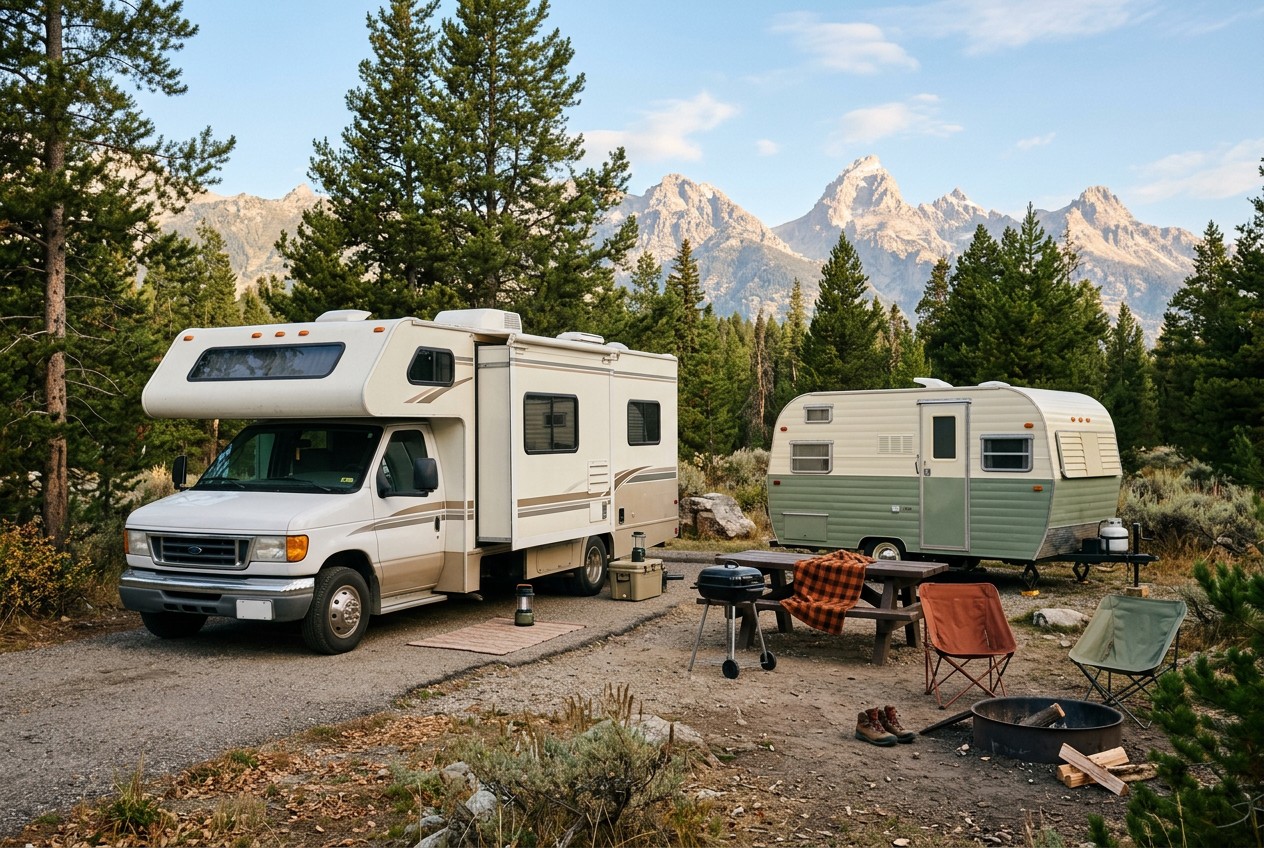
Mileage plans primarily apply to drivable RVs because the rental unit has its own odometer.
| RV type | Plain-English description | Mileage considerations |
|---|---|---|
| Class A motorhome | A large, bus-style RV with substantial living space | May use more fuel and feel demanding on narrow roads or in cities. Compare unlimited miles with included-mile and overage terms. |
| Class B campervan | A compact motorhome built inside a van body | Usually easier to park and maneuver. Fuel economy may be better than larger RVs, but the mileage plan still depends on the provider. |
| Class C motorhome | A motorhome with a cab-over sleeping area, often sized between Class A and Class B | Offers a balance of sleeping capacity and drivability. Daily mileage allowances and per-mile charges may apply. |
Unlimited mileage can reduce billing uncertainty on long routes, but it does not cover fuel. Size, speed, terrain, payload, and driving conditions can materially affect fuel use and the all-in trip cost. Confirm included miles, overage rates, generator hours, protection-plan charges, taxes, cleaning, and deposit terms in the itemized quote.
Travel Trailers and Delivered RV Rentals
A travel trailer is towed by a separate vehicle, so it does not accumulate motorhome-style rental mileage. Distance-related costs may instead include:
- Mileage or fuel for your tow vehicle
- Tow-vehicle rental restrictions
- Delivery radius limits
- Per-mile delivery charges
- Setup and pickup fees
A delivered RV is transported to a campground or event site and set up for you. This can eliminate towing and rental-unit driving, but the quote may include delivery, setup, pickup, or distance-based charges. Review the delivered RV rental guide before comparing this option with a drivable motorhome.
Policies vary by owner, fleet, vehicle, and location. Confirm the current itemized quote, distance limits, fees, refundable deposit, and rental terms directly with the provider before booking.
One-Way, Round-Trip, and Cross-Country Mileage Terms
One-Way RV Rental Fees and Route Limits
Unlimited mileage does not automatically include a one-way trip. The provider must approve a different drop-off location, and availability may depend on fleet logistics, vehicle type, dates, and destination.
A one-way quote may include:
- A drop-off or repositioning fee
- Location-specific return charges
- Approved route and destination restrictions
- Minimum rental periods
- Different pickup and return procedures
- Additional fuel or cleaning requirements
Some owners allow only round trips, even when mileage is unlimited. Review the one-way RV rental guide and confirm the exact return location, deadline, mileage treatment, and repositioning charges before booking.
Round-Trip and Cross-Country Road Trips
A round-trip rental returns to the original pickup location, which can simplify vehicle logistics and reduce uncertainty about drop-off approval. You still need enough rental days to complete the route without rushing.
Cross-country travel may be permitted, but unlimited miles alone does not authorize every destination or road. Check the rental agreement for:
- State, regional, or international travel restrictions
- Prohibited unpaved or remote roads
- Approved destinations and campground requirements
- Roadside assistance coverage areas
- Towing and repair authorization procedures
- Maximum trip length or driving limitations
Ask how breakdown support works outside the pickup region and which costs require prior approval. Fuel, generator hours, protection plans, taxes, cleaning, tolls, and refundable deposits remain separate from mileage.
Finding Options Near Your Route
Start with the RV Rental Compass directory and compare providers near your planned departure and return points. Expanding the search radius may reveal more vehicle types or mileage plans, but it can also add travel time and transportation costs before pickup.
Inventory, one-way permission, unlimited-mileage terms, fees, and route rules vary by owner, fleet, location, and date. Request a current itemized quote and confirm approved destinations, drop-off terms, roadside assistance, mileage exclusions, and deposit refund rules directly with the provider before paying.
Estimate Route Miles, Fuel, and a Realistic Driving Pace
Use a Trip Mileage Calculator and Add a Buffer
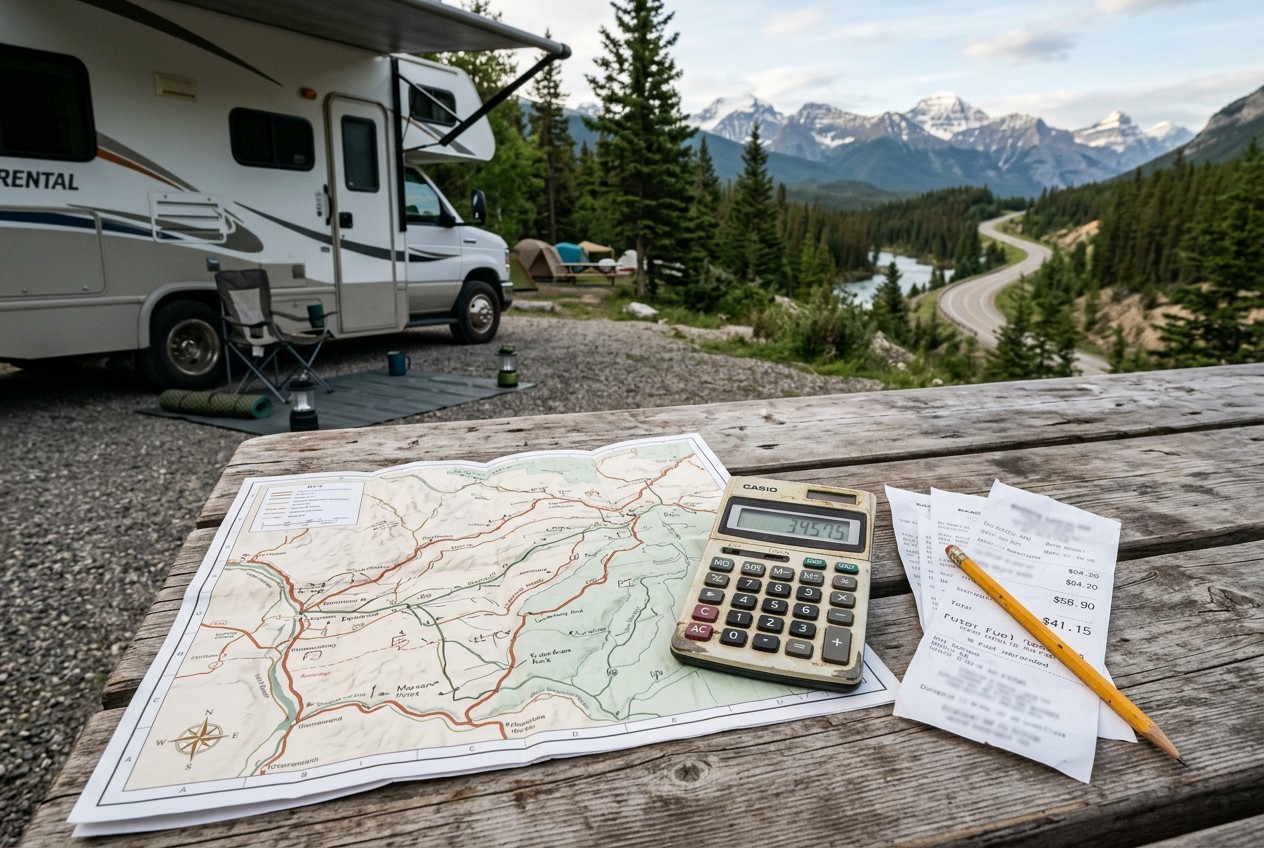
Enter every overnight stop into a trip mileage calculator, then add miles for:
- Campground access roads
- Grocery and fuel stops
- Local sightseeing
- Planned side trips
- Construction or weather detours
A practical estimate is the mapped route plus a 10%-15% buffer. For example, a 2,000-mile route becomes 2,200-2,300 projected miles. Use that total when comparing unlimited mileage against included miles, prepaid packages, or per-mile charges in the RV rental cost calculator.
Fuel Economy Can Outweigh Mileage Savings
Unlimited mileage eliminates qualifying mileage charges, not fuel consumption. Estimate fuel with this formula:
Projected miles / expected miles per gallon x fuel price per gallon
If a hypothetical RV averages 9 mpg over 2,250 miles, it would use about 250 gallons. Do not treat that figure as guaranteed. A large Class A motorhome may consume more fuel than a Class B campervan, while speed, mountain grades, wind, temperature, payload, traffic, and idling can change actual results. Generator use may also consume fuel or create a separate hourly charge.
Confirm the provider’s fuel-return requirements, generator allowance, and itemized fees before booking.
The Optional 3-3-3 and 4-4-4 Planning Rules
These informal guidelines help travelers avoid exhausting driving days:
- 3-3-3 rule: Drive no more than about 300 miles, arrive by 3:00 PM, and stay 3 nights.
- 4-4-4 rule: Versions vary, and the numbers should never be combined into a target of 400 miles in 4 hours. A safer interpretation uses roughly 4 hours of driving as the limit, aims to arrive by 4:00 PM, and may include a 4-night stay.
Definitions vary. Neither rule is a law, guarantee, or rental-provider policy. Adjust the pace for RV size, road conditions, daylight, weather, driver comfort, and campground check-in times. Unlimited miles do not make a rushed itinerary safer, cheaper, or more comfortable.
Compare RV Travel With Hotel and Car Costs
Build Both Trip Budgets on the Same Basis
Compare the complete cost for the same travelers, dates, route, and number of nights. The advertised RV nightly rate alone is not comparable to a hotel room rate.
| Cost category | RV trip | Hotel and car trip |
|---|---|---|
| Lodging and vehicle | RV rental and mileage plan | Hotel rooms plus rental car cost, or personal-car operating costs |
| Route expenses | RV fuel, tolls, and parking | Car fuel, tolls, and parking |
| Overnight stops | Campground fees | Hotel rates and lodging taxes |
| Coverage | Insurance or protection plan | Rental-car coverage, if applicable |
| Usage charges | Mileage overages and generator hours | Rental-car mileage charges, if applicable |
| Other charges | Taxes, service fees, cleaning, delivery, and setup | Hotel resort or destination fees and car-rental fees |
| Meals | Groceries, propane, and dining out | Dining out, groceries, and breakfast charges |
Keep refundable security deposits separate from actual trip expenses, but account for the temporary cash or credit hold. Use the RV rental cost calculator and RV rental prices guide to organize the RV side of the comparison.
Account for Space, Convenience, and Itinerary Tradeoffs
Price is only one factor. An RV may combine transportation, sleeping space, kitchen access, and storage for a family or group. Preparing some meals can reduce restaurant spending, although campground fees, grocery costs, and extra fuel still apply.
Hotels can offer easier city access, simpler parking, faster highway travel, and no campground setup. A car may also provide more route flexibility where large RV parking is limited. However, multiple hotel rooms can increase costs for larger groups, and frequent unpacking may be inconvenient.
Check campground availability before assigning value to an RV itinerary. Also consider sleeping capacity, seat belts for every passenger, driving time, shower and restroom needs, and the difficulty of maneuvering the selected RV.
Neither option is always cheaper. Compare itemized trip totals, then weigh comfort and route fit.
Booking Checklist and Unlimited Mileage FAQ
Pre-Booking Mileage Checklist
Before paying, confirm:
- Included mileage and the per-mile overage rate
- Whether unused prepaid miles are refundable
- Restricted roads, regions, and destinations
- One-way permission and repositioning fees
- Roadside assistance coverage and exclusions
- Included generator hours and additional hourly charges
- Pickup and return odometer procedures
- Refundable security deposit amount and conditions
- Timing for mileage adjustments and other post-trip charges
Request a current itemized quote showing the advertised nightly rate, mileage plan, protection plan, taxes, service fees, cleaning, generator use, and any delivery or setup charges.
How Is Rental Mileage Verified?
Providers generally record the odometer at pickup and return, then subtract the starting reading from the final reading. Take timestamped photos showing the odometer, fuel level, and dashboard at both handoffs. Keep copies of the inspection form and rental agreement.
The final mileage may determine an overage charge or reconcile an estimated mileage deposit. Confirm how disputes, refunds, taxes, and processing timelines are handled.
Frequently Asked Questions
Are unlimited mileage rentals available near me?
Availability varies by owner, fleet, location, vehicle, and date. Search the RV Rental Compass directory by location.
Do unlimited miles cost more?
The nightly rate may be higher, but the plan can reduce overage exposure. Compare the all-in trip cost.
Can I drive cross-country?
Possibly, if the provider approves the route and destinations. Geographic and road restrictions may still apply.
Does unlimited mileage include one-way travel?
No. One-way rentals require separate approval and may carry repositioning fees.
Before booking, confirm the mileage language, exclusions, deposit treatment, refund rules, and complete itemized quote directly with the provider.
Safety: RV size, weight, stopping distance and handling differ from those of a passenger car. Follow all traffic laws, take regular breaks and stop driving if you feel tired or uncomfortable.
Towing: Before towing a travel trailer, verify the tow vehicle’s rated towing capacity, payload, hitch limits, trailer brakes and all applicable licensing and equipment requirements.
Passenger safety: Sleeping capacity is not the same as safe travel capacity. Every passenger must use an approved belted seat, and child restraints must be installed only in seating positions permitted by the vehicle and restraint manufacturers.
Carbon monoxide and fire safety: Operate generators, propane appliances and other fuel-burning equipment only as directed by the manufacturer, maintain adequate ventilation and confirm that smoke, propane and carbon-monoxide alarms are working.
Sources and verification
- NHTSA Vehicle Safety provides federal vehicle-safety and recall resources.
- NHTSA guidance on securing cargo supports the load-security checks relevant to a long trip.
- CDC power-outage and camper carbon-monoxide guidance supports precautions around fuel-burning equipment in campers.
- USA.gov state motor vehicle services links to official state agencies for licensing and route-specific vehicle rules.
These sources support the vehicle-safety, load, carbon-monoxide and state-rule context above. They do not establish that mileage is unlimited and do not validate any rate, fee, vehicle, provider, route approval, availability, protection plan or specific policy; verify written terms directly.