
What Does an RV Rental Cost Per Day?
RV rental cost per day typically ranges from about $50 to $450, but that figure usually represents the advertised nightly rate. It is not the all-in trip cost.
The amount due at booking may also include insurance or a protection plan, service fees, cleaning, taxes, and optional add-ons. A security deposit may appear as a separate refundable hold rather than an actual trip expense. Fuel, propane, campground fees, tolls, parking, mileage overages, and generator-hour charges are often paid during or after the trip.
Average RV Rental Cost at a Glance
| Price component | Typical treatment |
|---|---|
| Advertised nightly rate | About $50-$450 across RV categories |
| Booking charges | Base rent plus applicable coverage, fees, and taxes |
| Refundable deposit | Temporary hold subject to the rental terms |
| Road-trip spending | Fuel, campsites, tolls, parking, and propane |
The average RV rental cost changes with RV type, location, dates, rental length, vehicle age, amenities, and season. Weekends and peak travel periods may price differently from shoulder-season dates, while weekly discounts can reduce the effective nightly rate.
Use the RV Rental Cost Index for broader comparisons. Before booking, request an itemized quote and confirm current pricing, deposit conditions, mileage, generator allowances, and provider terms.
Daily RV Rental Rates by RV Type
Daily rates vary by RV size, age, amenities, location, and season. The ranges below are planning estimates for the advertised nightly rate, not guaranteed quotes or all-in trip costs.
Class A, Class B and Class C Motorhome Costs
| RV type | Typical nightly rate | Plain-English description | Common cost tradeoff |
|---|---|---|---|
| Class A motorhome | $175-$450 | A large, bus-shaped RV, often with a full kitchen, bathroom, and several sleeping areas | More interior space, but usually higher rent and fuel use |
| Class B camper van | $100-$300 | A van-sized RV with compact cooking, sleeping, and sometimes bathroom facilities | Easier to drive and park, but limited storage and living space |
| Class C motorhome | $150-$350 | A truck-based RV identified by its sleeping area above the cab | A practical balance of capacity, amenities, and drivability |
Class A models commonly sleep larger groups, although the exact seat-belt and sleeping capacity must be verified. Class B vans often suit one or two travelers. Class C motorhomes frequently accommodate families without feeling as large as a Class A.
A smaller RV may reduce fuel and parking costs, but its nightly rate is only one factor. Compare mileage allowances, generator hours, insurance or protection plans, taxes, cleaning charges, and refundable deposits across current RV listings.
Travel Trailer Rental Costs
Travel trailers commonly advertise around $50-$200 per night. They are towable RVs rather than motorized vehicles, so you can leave the trailer at the campground and use the tow vehicle for local trips.
The lower rate may not create real savings if you need to rent a compatible tow vehicle or add hitch equipment. Confirm the trailer’s loaded weight, your vehicle’s towing limits, hitch type, brake-controller requirements, and provider rules. Towing experience also matters, particularly when backing into campsites.
Delivered RV Rental Costs
A delivered RV rental is transported to a campground or approved destination by the provider, then positioned for your stay. It can be a convenient choice when you do not want to drive a motorhome or tow a trailer.
The quote may include separate delivery and setup fees based on distance, destination access, or campground restrictions. Some providers also charge for pickup or require a minimum rental period. Confirm delivery boundaries, campsite compatibility, utility connections, setup details, and destination-specific pricing before booking.
For every RV type, compare the itemized total through RV rental options, not the headline rate alone. Policies, availability, fees, and deposits vary by owner, fleet, and location.
From Advertised Nightly Rate to All-In Trip Cost
The advertised nightly rate is only the starting point. A $150 listing booked for four billable nights creates a $600 base rental charge, but it does not show the complete amount you may pay before, during, and after the trip.
Charges Commonly Added to the Base Rate
Review each quote for these common additions:
| Charge | What to check |
|---|---|
| Insurance or protection plan | Daily cost, deductible, exclusions, and required coverage |
| Service fee | Whether it is mandatory and how it is calculated |
| Cleaning fee | Required charge and additional cleaning conditions |
| Sales and lodging taxes | Which rental charges and fees are taxable |
| Pet or one-way fee | Eligibility, restrictions, and calculation method |
| Kitchen and bedding kits | Included items and per-trip or per-person pricing |
| Delivery and setup fees | Distance limits, campsite access, connections, and pickup |
Mileage and generator overages can also appear on the final bill. Inclusion, mandatory status, and tax treatment vary by owner, fleet, and location. Request an itemized quote and confirm current terms directly with the provider.
Security Deposits and Refundable Holds
A security deposit is different from a service or cleaning fee. It is generally a refundable amount or card hold intended to cover issues such as damage, missing equipment, excess cleaning, late return, or violations of the rental agreement.
The provider may collect or authorize it before pickup, at pickup, or shortly before the trip. Ask how much credit must remain available, what conditions can reduce the refund, how disputes are handled, and when the hold should be released. Do not count a refundable deposit as trip spending, but include it in the cash or credit needed to travel.
A Practical All-In Cost Formula
Use this worksheet before comparing RV listings:
- Base rent: nightly rate x billable nights
- Usage charges: mileage overage + generator-hour overage
- Booking charges: coverage + service fee + cleaning + taxes
- Add-ons: pet, one-way, kitchen, bedding, delivery, and setup charges
- Rental quote subtotal: steps 1 through 4
- Road-trip spending: fuel + propane + campgrounds + tolls + parking
- Estimated all-in trip cost: rental quote subtotal + road-trip spending
- Separate refundable amount: security deposit or card hold
For example, build an estimate using four nights of rent, planned route mileage, expected generator use, selected coverage, quoted fees, and anticipated travel expenses. The result is a planning figure, not a guaranteed price. Confirm billable nights, allowances, taxes, deposit terms, and the final itemized total directly with the provider before booking.
How Mileage and Generator Use Change the Effective Daily Cost
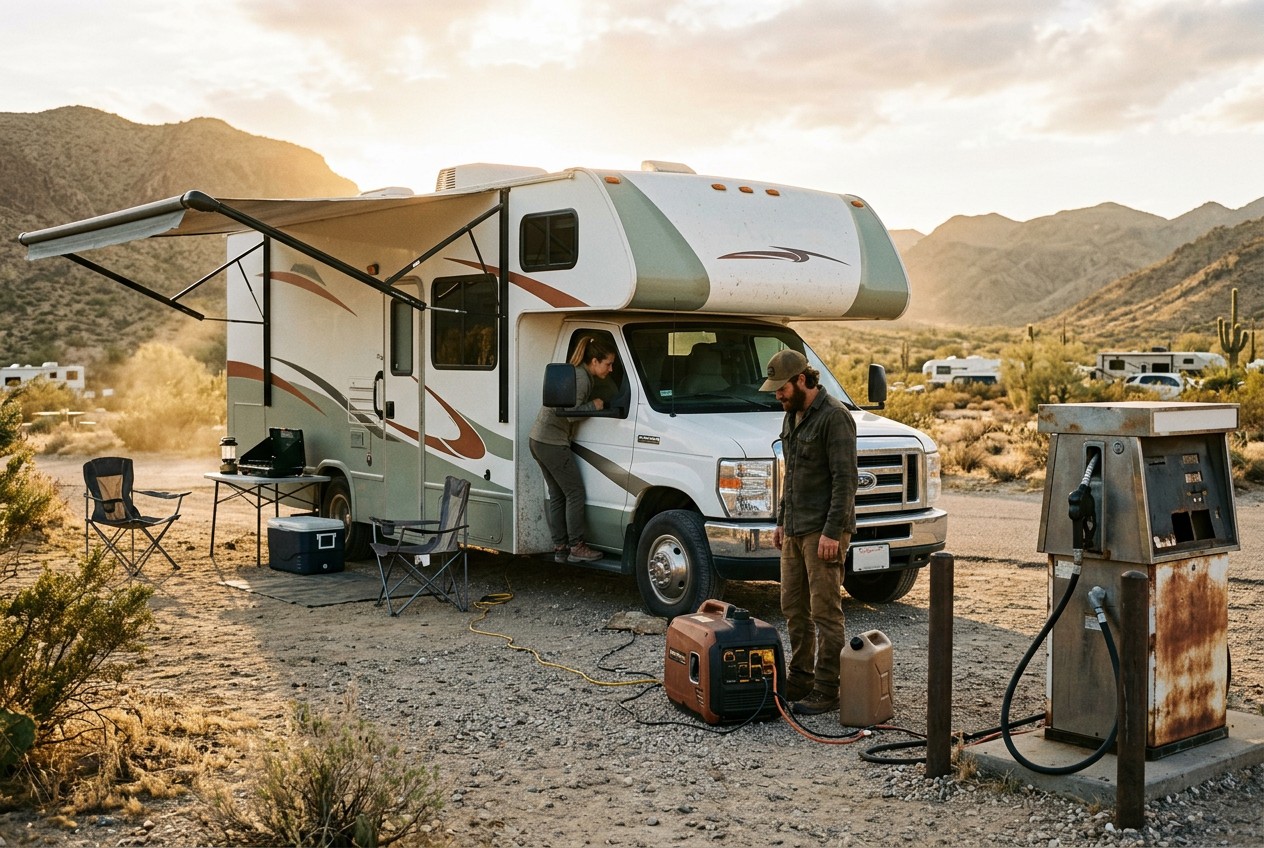
Two RVs with the same $175 advertised nightly rate can have different all-in costs. Included mileage, generator allowances, and billable days determine how much the rental actually costs per day.
Mileage Allowances and Excess Mileage Fees
Mileage may be included by day, provided as one trip-level allowance, or advertised as unlimited. Read the limits carefully because unlimited mileage offers may still have route, vehicle, or trip-length conditions.
Calculate a potential overage before booking:
- Add the miles for your complete route, including campground detours and local driving.
- Subtract the included mileage shown in the quote.
- Multiply the remaining miles by the stated excess mileage fee.
For example, suppose your route covers 900 miles and the quote includes 700 miles. If that specific quote lists a $0.50 per-mile overage, the estimate is:
(900 miles - 700 included miles) x $0.50 = $100
This is an illustration, not a typical or guaranteed fee. Use the allowance and per-mile charge from the provider’s current itemized quote.
Generator-Hour Allowances and Overage Charges
Motorhome rentals may include a limited number of generator hours per day or per trip. Generator power can be useful when camping without electrical hookups, running certain appliances, or using air conditioning where permitted.
Estimate the charge with:
Expected generator hours - included hours = overage hours
Then multiply the overage hours by the quoted hourly rate. A campsite with electrical hookups may reduce generator use, so confirm hookup availability and generator rules directly with the campground.
Minimum Rental Periods and Billable Days
A provider may require a three-night minimum even if you plan to use the RV for only two nights. Pickup and return times, late-return rules, extra-night charges, and one-way arrangements can also increase the number of billable days.
To find the effective daily rental cost, add base rent, expected mileage and generator overages, mandatory fees, coverage, and taxes, then divide by the number of trip days. Keep refundable deposits separate.
Before booking, confirm the minimum period, included usage, overage rates, return requirements, and complete itemized total. Policies vary by owner, fleet, and location.
Sample RV Rental Budgets by Trip Length
Weekend, One-Week and Two-Week Budget Examples
Assume the same Class C motorhome advertises at $175 per night. These examples are planning frameworks, not current quotes.
| Trip length | Base rent | Mileage and generator use | Quote additions | Costs outside quote |
|---|---|---|---|---|
| 3-day weekend | $525 | Planned miles minus included miles, plus generator overages | Protection plan, service and cleaning fees, taxes | 3 campground nights, fuel, propane, tolls, parking, food |
| 1 week | $1,225 before discounts | Same calculation using the 7-day allowance | Coverage, mandatory fees, taxes, selected add-ons | 7 campground nights and continuing travel costs |
| 2 weeks | $2,450 before discounts | Longer route may create larger overages | Coverage, fees, taxes, optional kits | 14 campground nights, fuel, propane, tolls, parking, food |
Add each row’s categories to estimate the all-in trip cost. Keep any refundable security deposit separate. A weekend can have a surprisingly high effective daily cost because fixed cleaning and service fees are divided across only three days.
Weekly Rental Discounts
A weekly rental discount may reduce the average nightly rate. For example, compare seven nights at the standard rate with the provider’s quoted weekly total, then divide that total by seven.
The lower nightly average does not mean a lower total trip cost. Extra days still add campground charges, food, fuel, possible generator use, and other spending. Confirm whether the discount changes included mileage or applies before taxes and fees.
Monthly Rental Rates and Extended Trips
A monthly rental rate can further reduce the effective daily rental price, but extended travel remains a substantial expense. Review monthly mileage limits, overage pricing, maintenance responsibilities, long-stay campsite costs, cleaning requirements, and restrictions on where the RV may travel.
Before booking, compare the complete itemized quote with your estimated road-trip spending. Rates, discounts, availability, fees, and policies vary by owner, fleet, season, and location.
Road-Trip Expenses Outside the Rental Quote
Fuel, Propane, Tolls and Parking
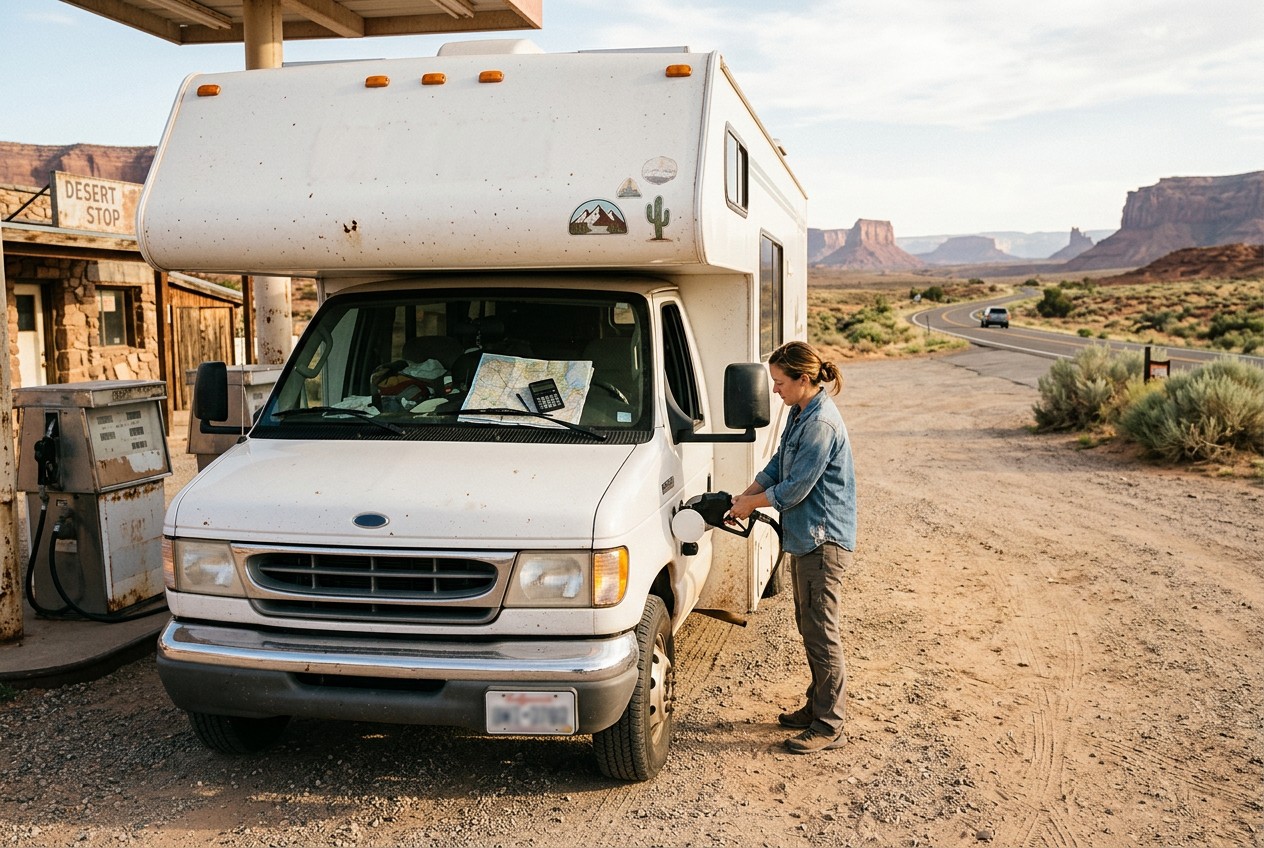
Estimate fuel with a route-based formula:
Route miles ÷ expected MPG x current fuel price per gallon = estimated fuel cost
Include local driving and detours, not just highway miles. Larger Class A and Class C motorhomes typically consume more fuel than Class B camper vans, while tow vehicles use more fuel when pulling a travel trailer.
Also budget for tolls, parking, and possible oversized-vehicle charges. Review the rental terms for propane refill and fuel-return requirements. Use current prices along your route rather than a generic daily estimate.
Campground Fees and Overnight Choices
Campground spending depends on location, season, RV size, and utility access. Compare:
- Nightly campsite rate
- Reservation or booking charge
- Full hookups versus electric-only or no-hookup sites
- Extra vehicle, guest, pet, or dump-station charges
- Cancellation and change terms
Other lawful overnight options may cost less, but access, stay limits, and RV rules vary. Confirm that the site fits the RV’s length and slide-outs, and verify electrical service, water, sewer, generator rules, availability, and current pricing directly with the campground.
RV Rental Versus Hotel Costs
An RV is not automatically cheaper than a hotel. Compare complete trip budgets using the same dates, route, group size, and comfort level.
| RV trip | Hotel trip |
|---|---|
| Rental quote and campsite fees | Hotel rooms and taxes |
| RV fuel, tolls, and parking | Rental car or local transportation |
| Propane and possible hookup charges | Hotel parking and destination fees |
| Groceries plus meals out | Restaurant meals and available kitchen costs |
RV value often improves when several travelers share one vehicle and cook regularly. Hotels may cost less for short urban trips with expensive parking or limited RV sites. Build both budgets from current quotes before choosing.
How to Compare RV Quotes and Spend Less
RV Rental Quote Comparison Checklist
Compare RV listings using the same assumptions:
- Identical travel dates and pickup and return locations
- Required sleeping and seat-belt capacity
- Minimum rental period and billable nights
- Planned mileage and included mileage allowance
- Expected generator use and included hours
- Comparable insurance or protection plans
- Taxes, service fees, cleaning fees, and required add-ons
- Pet, one-way, delivery, setup, kitchen, and bedding charges
- Refundable security deposit and card-hold amount
Calculate each offer’s estimated all-in trip cost. A $140 nightly rate can cost more than a $160 option if it includes less mileage, higher mandatory fees, or more expensive coverage. Keep refundable deposits separate from actual spending, but account for the credit or cash required.
Ways to Lower the Total Cost
Try shoulder-season dates, a smaller suitable RV, and a shorter route. Fewer miles can reduce both fuel spending and excess mileage charges. Booking campsites with electrical hookups may also limit generator use.
Remove optional kitchen or bedding kits if you can bring your own. Avoid one-way, pet, delivery, or setup charges when those services are unnecessary. Weekly pricing may lower the effective nightly rate, but compare the complete trip total.
Do not save money by skipping required or appropriate coverage, exceeding safe occupancy, or choosing an RV that cannot handle your group, route, or towing needs.
Terms to Confirm Before Booking
Ask the provider to confirm:
- Current itemized pricing and mandatory charges
- Cancellation terms and refund deadlines
- Security deposit deductions and release timing
- Mileage and generator allowances and overage rates
- Fuel and propane return requirements
- Cleaning standards, damage reporting, and claim procedures
Prices, policies, fees, and availability vary by owner, fleet, and location. Review the current rental agreement and complete itemized quote before paying.
RV Rental Cost FAQ
Is It Cheaper to Rent an RV by the Week or Month?
Weekly or monthly pricing may reduce the effective nightly rate compared with booking individual nights. However, a longer rental usually increases total spending because rent, campground fees, fuel, food, and other travel expenses continue accumulating.
Compare the discounted base rent, included mileage, generator hours, fees, and taxes. A lower daily average does not necessarily mean a cheaper trip.
Does the RV Rental Price Include Mileage and Insurance?
Sometimes. A rental may include a daily or trip-level mileage allowance, with an excess mileage fee applied beyond that limit. Unlimited-mileage offers may have additional conditions.
Insurance or a protection plan may be required, optional, or partly included. Coverage limits, deductibles, exclusions, and daily charges differ by owner, fleet, and location. Verify both mileage and coverage line by line in the itemized quote.
What Is the 3-3-3 Rule for RV Travel?
The 3-3-3 rule is a pacing guideline, not a rental pricing rule. Common versions suggest driving no more than about 300 miles per day, arriving by 3:00 PM, and staying three nights.
Following it may reduce daily driving stress and potentially limit fuel use or mileage overages. Before booking, confirm current rates, availability, allowances, cancellation terms, fees, taxes, and refundable deposit conditions directly with the provider.
RV safety and legal requirements vary by vehicle and jurisdiction. Follow the rental agreement and manufacturer instructions, verify driver-license and towing requirements, and comply with all traffic, parking, camping, and campground rules.
Never operate a generator in an enclosed or partially enclosed space. Keep exhaust away from doors, windows, and vents, maintain working carbon monoxide alarms, and follow all manufacturer and campground instructions.
Propane is flammable and can create fire, explosion, and asphyxiation hazards. Follow the provider’s operating and refilling instructions, keep required alarms working, extinguish flames before refueling, and leave the RV and seek assistance if you smell gas or suspect a leak.
Sleeping capacity is not the same as legal passenger capacity. While the RV is moving, every passenger must occupy an approved travel seat and use the seat belt or child restraint required by applicable law.
Before towing, verify the trailer’s actual loaded weight, tongue weight, and load distribution against every applicable vehicle, hitch, axle, and tire rating. Use all legally required brakes, lights, mirrors, safety chains, and other towing equipment.