What Is an RV Delivery Rental?
An RV delivery rental is a camper that the provider transports to a campground, festival, event site, or private property. The unit is prepared for stationary use, so you can camp without owning a tow vehicle or choosing a drivable motorhome rental. Common uses include family reunions, weddings, temporary guest lodging, and vacations where everyone meets at one destination.
How RV Rental Delivery to a Campsite Works
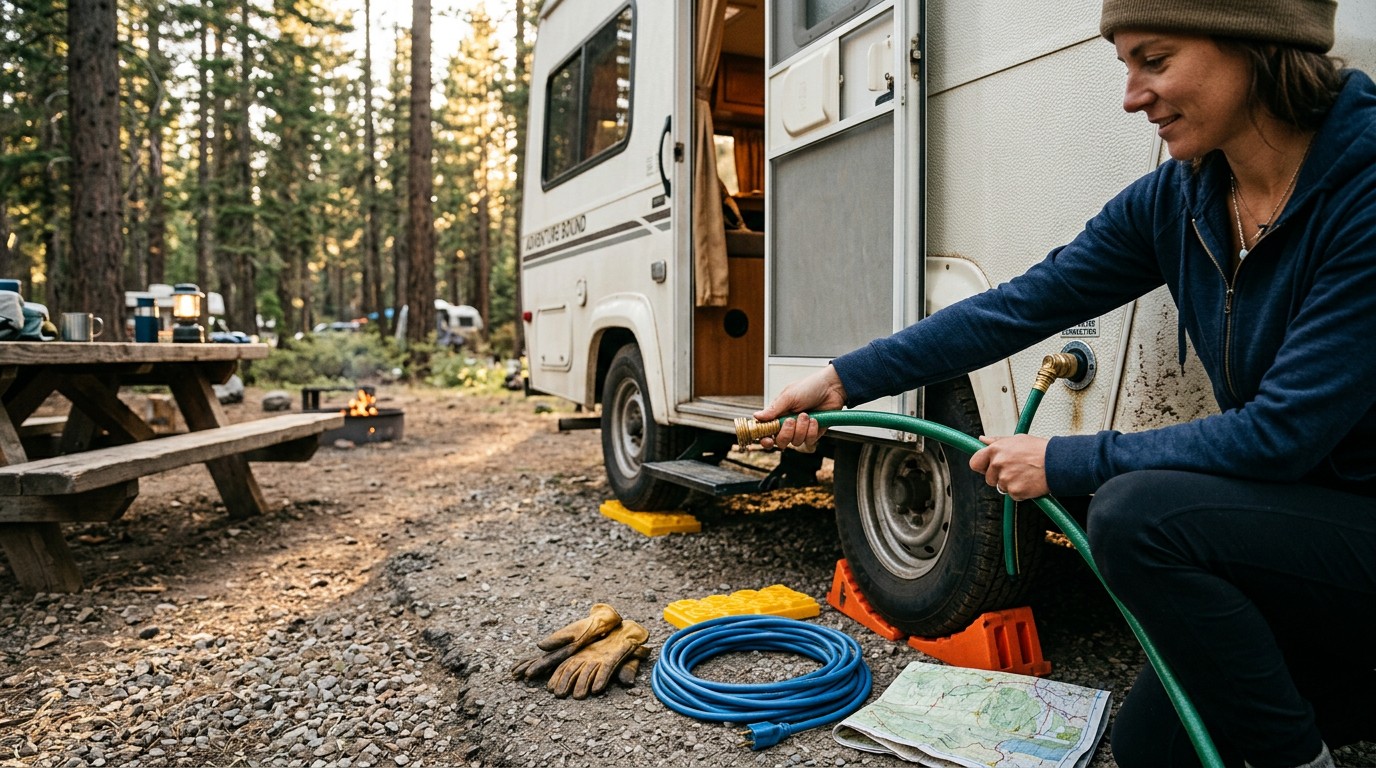
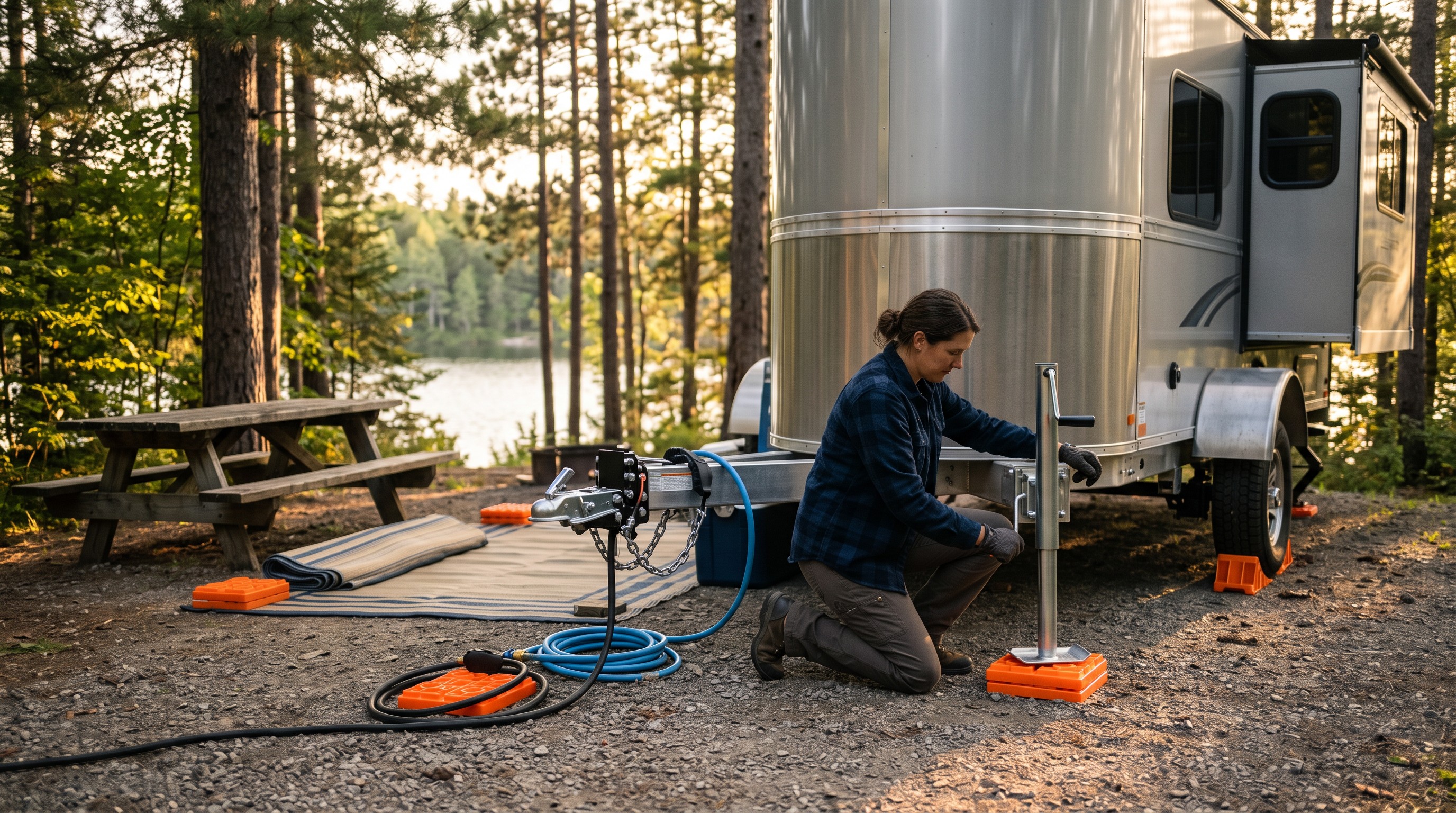
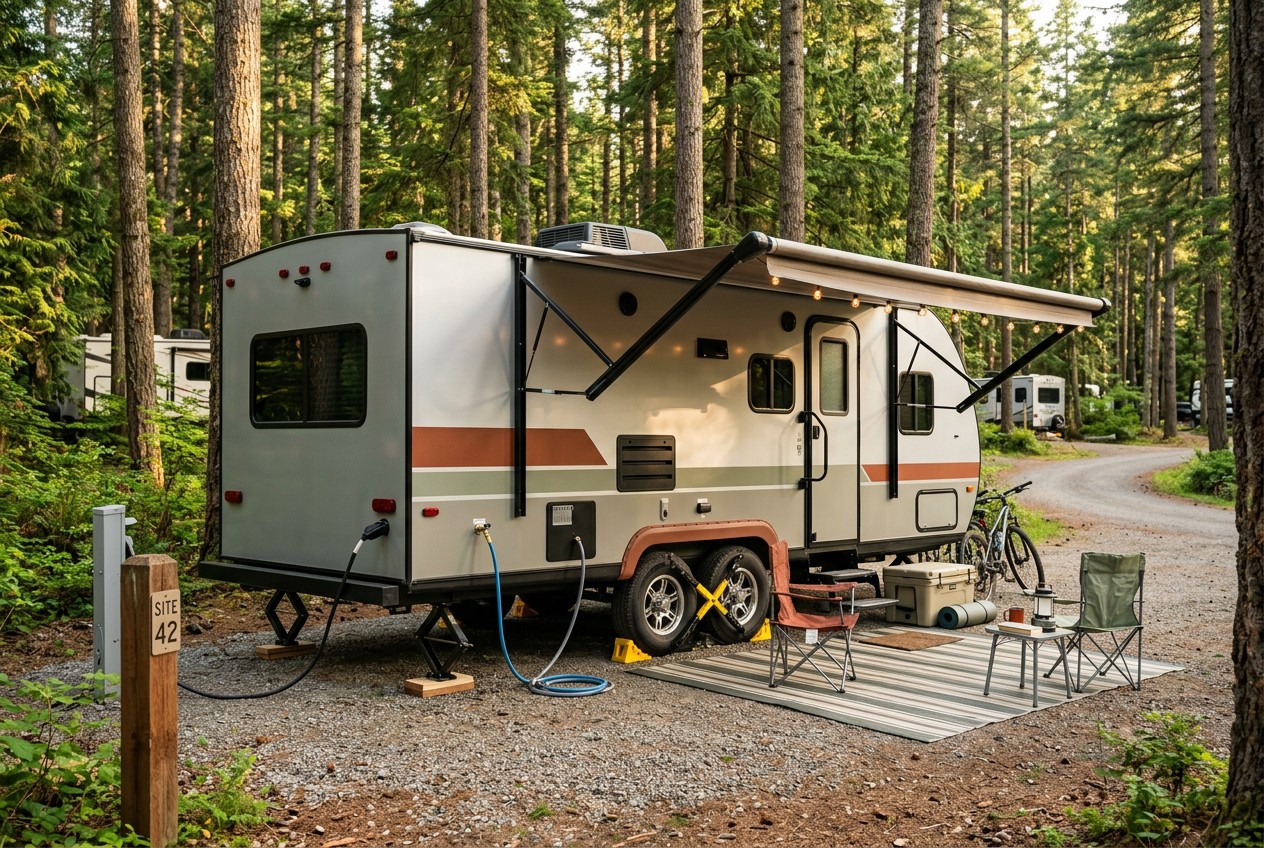
The renter usually reserves the campsite first and confirms the campground delivery policy for third-party vendors. The provider then brings the RV during an agreed arrival window and completes the setup included in the booking. This may cover RV leveling, stabilizers, slide-outs, shore power, fresh water, sewer connections, and an operating walkthrough.
You use the RV at the destination. At checkout, the provider handles breakdown and pickup, although you may still be responsible for cleaning, tank use, or waste disposal under the contract.
Check the delivery radius, site-access requirements, setup details, and itemized quote before paying. The advertised nightly rate may exclude delivery, protection, taxes, cleaning, service charges, add-ons, and a refundable security deposit.
Delivered RV vs Drivable, Towable, and Owner-Pickup Rentals
| Rental type | Who transports it | Best fit |
|---|---|---|
| Delivered RV | Provider | Stationary stays without driving or towing |
| Class A, B, or C motorhome | Renter drives | Road trips with multiple stops |
| Towable travel trailer | Renter tows | Travelers with a compatible tow vehicle |
| Owner-pickup trailer | Renter collects and tows | Renters prepared for towing and setup |
A Class A motorhome is large and bus-like, a Class B camper van is compact, and a Class C motorhome has a cab-over sleeping area. A travel trailer has no engine. Browse the RV Rental Compass directory to compare current options and provider terms.
Which RV Type Fits Your Trip?
Comparison Table: Class A, Class B, Class C, Travel Trailer, and Delivered RV
Match the RV to your route, group size, and comfort with driving or towing. Listed sleeping capacity can include convertible dinettes or sofas, so confirm the number and size of permanent beds.
| RV type | Best fit | Space and setup considerations |
|---|---|---|
| Class A motorhome | Larger groups and extended road trips | Bus-like interior with generous living space, but its length can make parking and campground access harder |
| Class B camper van | Couples, solo travelers, and frequent stops | Compact and easier to drive, with limited storage, sleeping space, and bathroom facilities |
| Class C motorhome | Families wanting a balance of space and mobility | Cab-over bed adds sleeping capacity without the size of many Class A models |
| Travel trailer | Campers with a compatible tow vehicle | No engine, so towing capacity, hitch equipment, backing, leveling, and hookups matter |
| Fifth wheel | Longer stays and groups wanting more interior room | Often spacious with tall ceilings, but requires a compatible pickup and special hitch unless delivered |
| Toy hauler | Trips involving motorcycles, bikes, or bulky equipment | Rear garage provides cargo space that may convert into sleeping or living space |
| Delivered RV | Stationary campground stays without driving or towing | Provider transports the unit and performs the setup specified in the rental agreement |
When a Fifth Wheel or Toy Hauler Makes Sense
A fifth wheel can provide separate living and sleeping zones, making it useful for families or longer stays. A toy hauler adds a garage area for recreational equipment, event supplies, or extra beds after unloading.
Both can be long and heavy. Before booking, verify the RV length, slide-out clearance, campsite pad dimensions, gate width, turns, overhead obstacles, and space for the delivery vehicle. Provider delivery capability may also depend on distance and site access.
Common Reasons to Choose a Stationary RV Rental
A delivered RV works well when the destination matters more than the drive. Typical uses include:
- Campground vacations without a tow vehicle
- Festivals and group events
- Family reunions and weddings
- Temporary guest lodging on eligible private property
- Extra accommodations beside another RV or cabin
Delivery can simplify arrival, but it does not make every RV suitable for every site. Compare sleeping arrangements, bathrooms, kitchen equipment, utilities, and included setup through the RV delivery rental directory.
The advertised nightly rate is only one part of the decision. Delivery, setup, protection, taxes, cleaning, add-ons, and a refundable deposit can change the all-in trip cost. Confirm the current itemized quote and terms directly with the provider before booking.
RV Delivery Rental Costs and the True All-In Trip Cost
Nightly Rates, Minimum Stays, and Delivery Pricing
The advertised nightly rate is the base price, not the all-in trip cost. In a hypothetical example, $150 per night with a three-night minimum produces $450 in base rent, but delivery, setup, protection, taxes, cleaning, and other charges may increase the amount due. This is arithmetic, not a typical-rate claim or local quote.
Delivery pricing can follow several models:
- A flat fee within a defined delivery radius
- A per-mile charge
- A fee based on one-way distance
- A round-trip distance charge covering delivery and pickup
- Separate transportation and setup fees
Ask which mileage point starts the calculation and whether campground entry, tolls, or remote-site access affect the quote. Confirm that breakdown and pickup are included. A site outside the stated delivery radius may be unavailable or priced differently.
Protection, Taxes, Cleaning, and Other Fees
Request an itemized quote that separates mandatory charges from optional add-ons.
| Cost item | What to confirm |
|---|---|
| Nightly rate | Number of billable nights and minimum stay |
| Delivery and setup | Distance calculation, setup tasks, breakdown, and pickup |
| Insurance or protection plan | Coverage, exclusions, deductible, and whether it is required |
| Roadside assistance | Whether it applies to a stationary delivered RV |
| Service and cleaning fees | Required amount and checkout standards |
| Taxes | Applicable sales, lodging, or other taxes |
| Add-ons | Pet fee, linens, kitchen supplies, outdoor equipment, propane, or waste service |
Do not assume hookups, full propane tanks, bedding, cookware, or wastewater disposal are included. Policies vary by owner, fleet, destination, and rental platform.
For a quick comparison, use the RV rental cost guide and RV rental cost calculator, then replace estimates with the provider’s current itemized quote.
Refundable Deposits, Mileage, and Generator Hours
A refundable security deposit or damage deposit is usually an authorization or payment held against damage, excessive cleaning, missing equipment, or other contract violations. It affects the amount you must have available but should be listed separately from nonrefundable trip charges.
Confirm:
- Deposit amount and payment method
- When the deposit is charged or authorized
- Conditions that allow deductions
- Damage documentation procedures
- Expected release or refund timing
Delivered travel trailers generally do not create renter mileage charges because the provider transports them. Delivery-distance charges may still apply. By contrast, drivable Class A, Class B, and Class C rentals often include a mileage allowance with possible overage charges.
Generator use can also be limited by included hours, hourly overage pricing, fuel rules, or campground restrictions, especially during dry camping. Before booking, confirm the current mileage, generator, cancellation, and deposit terms directly with the provider.
How to Book a Delivered RV Step by Step
Reserve the Campsite and Confirm Delivery Permission
-
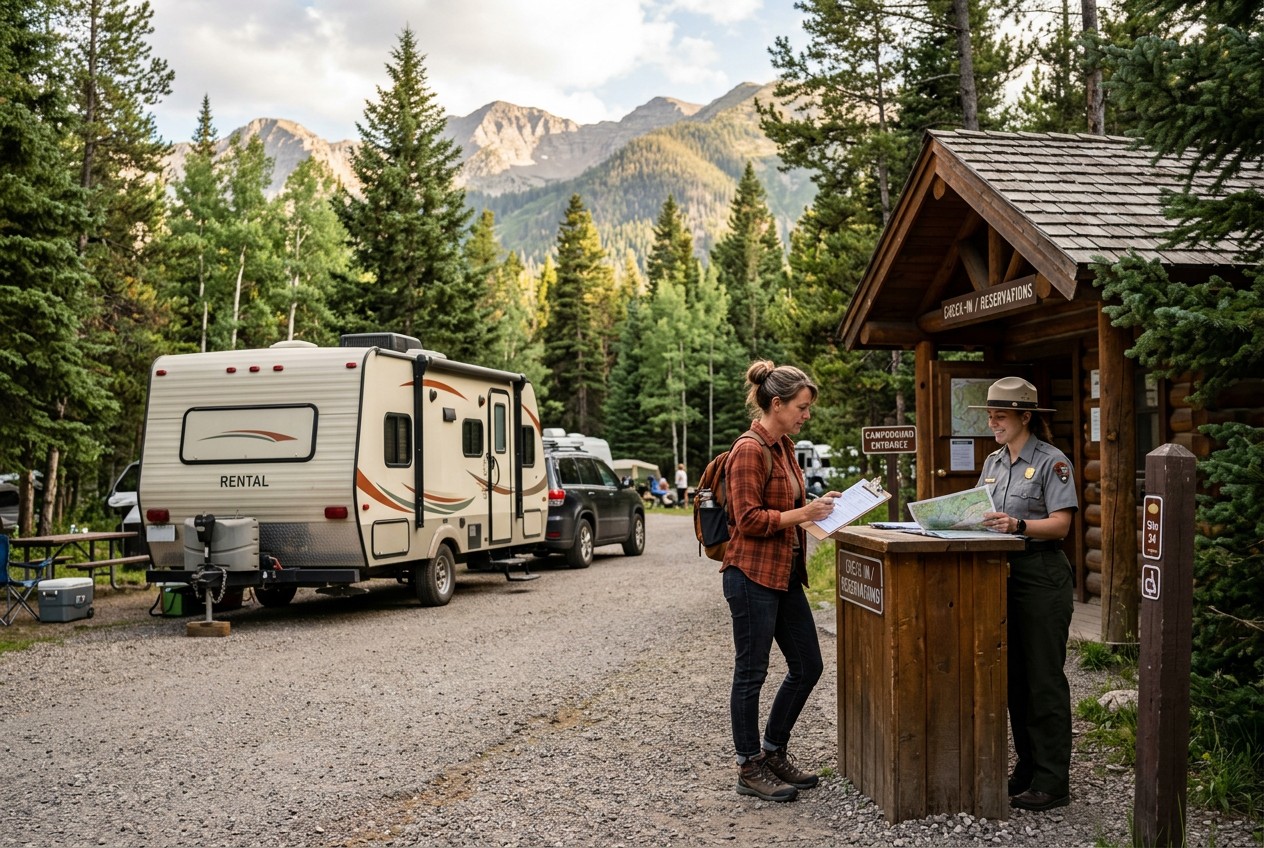
Choose the destination and reserve a compatible site. The renter usually books and pays for the campsite separately. Provide the campground name, address, reservation dates, site number if assigned, and RV size limits when requesting rental quotes.
-
Ask the campground about third-party delivery. Confirm that an outside provider may enter, position, and retrieve the RV. Check vendor restrictions, gate hours, check-in procedures, parking passes, insurance requirements, and whether the reservation holder must be present. Private-property stays may require owner approval and suitable access.
-
Verify the provider’s delivery radius. Ask whether delivery is priced as a flat fee, per mile, one-way, or round trip. Request an itemized quote showing the nightly rate, delivery, setup, protection plan, taxes, cleaning, add-ons, and refundable deposit.
Coordinate the Delivery Window and Setup
-
Exchange arrival details. Save the provider’s phone number and give them your contact information. Confirm the delivery window, gate code, site number update process, and who handles campground registration. Ask what happens if the site is occupied, inaccessible, or not ready when the provider arrives. Waiting, rescheduling, or failed-delivery terms vary.
-
Define the setup service in writing. Determine whether the provider will:
- Position and level the RV
- Install stabilizers
- Deploy slide-outs
- Connect shore power, fresh water, and sewer
- Prepare wastewater tanks for use
- Check propane and battery levels
- Explain appliances, heating, air conditioning, and safety equipment
Do not assume an awning will be opened or that linens, cookware, hoses, adapters, propane, or waste service are included. If the campsite has no hookups, confirm fresh water capacity, generator rules, included generator hours, fuel responsibility, and wastewater limits.
Inspect the RV Before Use and Confirm Pickup
-
Complete an arrival inspection. Photograph the exterior, interior, furniture, appliances, and any existing damage. Test the agreed amenities while the provider is available. Review occupancy limits, slide and awning rules, emergency exits, smoke and carbon monoxide alarms, tank monitors, and the contact procedure for equipment problems.
-
Use the RV only as permitted. A delivered RV is generally a stationary rental. Do not move, tow, or drive it unless the contract explicitly authorizes that use.
-
Confirm checkout and retrieval. Ask when breakdown and pickup will occur and whether you must be present. Clarify trash removal, cleaning, dishes, linens, tanks, sewer disposal, keys, pets, and campground checkout duties. Before leaving, document the RV’s condition and report damage promptly.
Finally, verify how the refundable security deposit is inspected, when deductions may occur, and the expected release timeline. Prices and policies differ by owner, fleet, and location, so confirm the complete quote and current terms directly with the provider before booking.
Check Campsite Compatibility Before You Pay
RV Length, Slide-Outs, and Site Access
Match the RV’s actual dimensions to the campsite, not just the campground’s maximum advertised length. Ask the provider for the total length, width with slide-outs extended, height, and required clearance around doors, steps, vents, and awnings.
Confirm these details with the campground:
- Usable pad length and width
- Trees, posts, fire rings, slopes, and overhead branches
- Gate width, sharp turns, grades, and low clearances
- Parking rules for personal vehicles
- Space for the provider’s tow vehicle to position and retrieve the RV
A 35-foot site may not comfortably fit a 35-foot trailer plus its hitch, extended slides, and a parked car. Photos and a site map can help, but campground staff should confirm current conditions and delivery access.
Shore Power, Water, and Sewer Hookups
Check whether the site provides 30-amp or 50-amp shore power and confirm that it matches the RV’s plug. Ask whether the provider supplies any required electrical adapter or extension cord. Do not use household extension cords unless the provider specifically approves suitable equipment.
For water and sewer, verify:
| Utility | What to confirm |
|---|---|
| Fresh water | Hookup availability, hose length, pressure regulator, and potable-water hose |
| Sewer | Connection location, hose reach, fittings, and whether the site is level enough for drainage |
| Holding tanks | Fresh, gray, and black tank capacity if connections are unavailable |
| Equipment | Hoses, adapters, filters, supports, and extension equipment included in setup |
A partial-hookup site may provide electricity and water but no sewer. Ask whether pickup includes tank dumping or if a separate waste-service charge applies.
Planning for Dry Camping
Dry camping means the site lacks some or all utility hookups. Before booking, estimate how long the RV can operate using its batteries, onboard fresh water, wastewater tanks, propane, and generator.
Confirm:
- Battery capacity and charging method
- Fresh water supplied at delivery
- Gray and black tank limits
- Generator availability, included hours, overage terms, and fuel responsibility
- Campground quiet hours and generator restrictions
- Appliances that cannot run without shore power
- Waste disposal arrangements before pickup
Air conditioning, microwaves, and other high-draw appliances may require shore power or a suitable generator. Tank capacity can also limit showers and dishwashing. Get the setup requirements and current dry-camping terms in writing before paying, because equipment and policies vary by RV, provider, and location.
Compare Providers, Quotes, and Rental Terms
Compare Itemized Quotes, Not Headline Prices
Start with the RV Rental Compass directory or browse RV delivery rentals, then narrow the search by location in the directory. Request written quotes using identical trip details so the totals are comparable.
Check each quote for:
- Exact dates and minimum rental period
- RV type, length, sleeping capacity, and bed layout
- Delivery address, distance calculation, and delivery radius
- Nightly rate and number of billable nights
- Delivery, setup, breakdown, and pickup charges
- Insurance or protection plan and deductible
- Service fees, cleaning fees, and applicable taxes
- Pet fees, linens, equipment, propane, and waste service
- Refundable security deposit and payment timing
A lower nightly rate may produce a higher all-in trip cost after mandatory fees. Separate nonrefundable trip charges from the refundable deposit, and ask which optional items can be removed.
What Should Be Included in Setup Service?
“Setup included” can mean anything from parking the trailer to preparing it fully for use. Ask the provider to list each task in writing.
Confirm whether setup covers:
- Positioning, leveling, and stabilizers
- Slide-out deployment and clearance checks
- Shore power, fresh water, and sewer connections
- Tank preparation and initial water supply
- Propane and battery checks
- Instructions for awnings, appliances, heating, and air conditioning
- Linens, cookware, camp chairs, tables, or other outdoor equipment
- An arrival walkthrough and emergency contact information
- Breakdown, tank dumping, and end-of-stay waste handling
If the campsite lacks full hookups, verify generator hours, fuel responsibility, battery charging, fresh water capacity, and wastewater limits.
Review Cancellation, Weather, Damage, and Late-Arrival Rules
Read the current rental agreement before paying. Policies vary by owner, fleet, platform, and location.
Confirm cancellation deadlines, refund percentages, rescheduling options, and how weather-related closures are handled. Ask what happens if the provider arrives late, the renter misses the walkthrough, or the campsite is occupied, inaccessible, or outside the approved delivery area.
Also review pet restrictions, occupancy limits, cleaning standards, damage-reporting procedures, and prohibited uses. The agreement should explain possible deposit deductions, required evidence for damage claims, and the expected deposit-release timeline.
Do not rely on listing summaries or messages that conflict with the contract.
RV Delivery Rental Checklist and FAQ
Pre-Booking Checklist
Before paying, confirm:
- The campground permits third-party RV delivery and retrieval
- The RV’s length, height, slide-out clearance, sleeping capacity, and bed layout fit the site and group
- The provider can access the gate, roads, turns, and campsite pad
- Shore power amperage, water, sewer, and dry-camping equipment match the RV
- Setup includes the agreed leveling, stabilizers, hookups, slides, and walkthrough
- Linens, cookware, hoses, adapters, propane, generator use, and outdoor equipment are listed as included or excluded
- The itemized quote shows the nightly rate, minimum stay, delivery, setup, protection plan, taxes, cleaning, pet fees, add-ons, and refundable deposit
- Cancellation, weather, damage, late-arrival, and deposit-return terms are clear
- Breakdown, waste disposal, cleaning, and pickup responsibilities are documented
Prices and policies vary by owner, fleet, and location.
Do I Need to Drive or Tow the RV?
Generally, no. With an RV delivery rental, the provider transports the RV to the destination, sets it up as agreed, and retrieves it after checkout. The renter normally uses it only as stationary lodging.
Do not move, tow, or drive the RV unless the contract explicitly permits it. Follow the provider’s rules for awnings, slide-outs, appliances, generator use, occupancy, and utility connections.
Who Books the Campsite, and What Happens After Delivery?
The renter usually reserves and pays for the campsite, then confirms that the provider may enter for delivery and pickup. Ask the campground about gate access, vendor restrictions, check-in procedures, and site-number updates.
After setup, inspect the RV, photograph existing damage, test agreed amenities, and save the emergency contact number. Confirm pet rules, occupancy limits, cleaning duties, tank and trash requirements, and appliance instructions.
Report damage or equipment problems promptly. At checkout, complete the required cleaning and secure personal belongings. The provider typically handles breakdown and pickup. Refundable deposit timing and possible deductions depend on the rental agreement, so document the final condition and verify the return process in advance.
Generator safety: Operate generators only outdoors and well away from doors, windows, vents, and neighboring campsites. Never run a generator inside, beneath, or in an enclosed space near the RV because carbon monoxide can cause serious injury or death.
Safety equipment: Before occupying the RV, verify that smoke and carbon monoxide alarms work, locate the fire extinguisher and emergency exits, and report missing or defective safety equipment to the provider immediately.
Propane safety: If you smell gas or a propane or carbon monoxide alarm activates, extinguish open flames, leave the RV immediately, avoid operating electrical switches, and contact the provider or emergency services from a safe location.
Electrical safety: Use only undamaged, correctly rated RV power cords, adapters, and campground connections. Do not use improvised equipment or handle electrical connections with wet hands.
Wastewater safety: Dispose of gray and black water only through an approved sewer connection or authorized dump station. Follow campground rules and use appropriate hygiene precautions.
Legal requirements: Private-property RV stays may be subject to zoning, occupancy, sanitation, fire-safety, permitting, and association rules. Obtain the property owner’s permission and confirm applicable local requirements before booking.
Sources and verification
- CDC generator safety guidance supports the carbon-monoxide precautions for generator use.
- NHTSA guidance on securing cargo supports checking and securing transported equipment.
- USA.gov state motor vehicle services links to official state agencies for licensing, registration and state-specific vehicle rules.
These sources support the generator, load-security and state-rule context above. They do not validate a delivery area, setup service, campsite, rental rate, fee, vehicle, provider, availability, protection plan or specific policy; verify written terms directly.