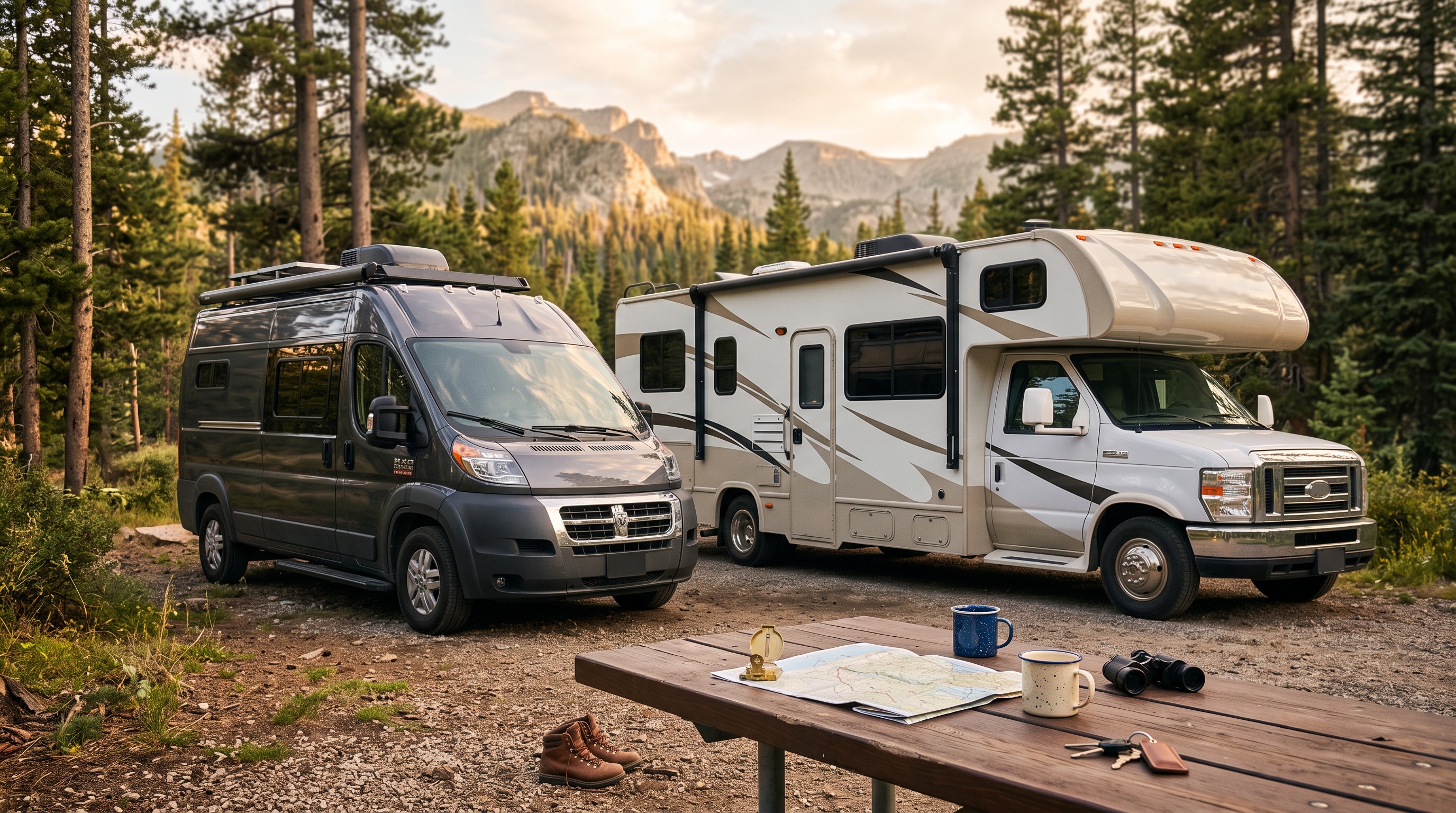
Class B vs Class C RV: The Basic Difference
A Class B is a camper van built within a van body. A Class C is a motorhome constructed on a cutaway truck chassis, with a separate living box behind the cab. The right choice depends less on the label and more on the exact floor plan, dimensions, and travel party.
Class B Camper Van at a Glance
A Class B RV rental is typically the more compact option. Its narrower body and shorter length can simplify city driving, fuel stops, parking, and frequent campground changes.
The tradeoff is limited interior space. Beds may convert from seating, storage can be tight, and many models use a compact wet bath. Class B camper vans commonly work best for one or two travelers who pack lightly.
Class C Motorhome at a Glance
A Class C RV rental usually has a wider living area and a recognizable cab-over section, often containing an extra bunk. Family-oriented layouts may add a dinette bed, sofa bed, fixed rear bed, larger kitchen, or separate shower.
That extra room improves sleeping capacity and indoor comfort, but also increases height, width, turning space, and parking demands.
How Other RV Types Fit In
A Class A is a larger, bus-shaped motorhome. A travel trailer has no engine and requires a properly rated tow vehicle. A delivered RV is transported and set up at a campsite, so the renter does not drive it.
Use the RV type directory and the comparison below to understand these categories before reviewing individual listings. Always confirm the exact vehicle specifications and current provider terms.
Size, Driving, Parking, and Fuel Economy
City Streets, Parking Lots, and National Park Roads
Class B camper vans are commonly about 18-24 feet long, while many Class C motorhomes measure roughly 22-32 feet. Exact dimensions vary, so check the listing and vehicle specification sheet before planning the route.
A shorter, narrower Class B generally handles city streets, gas stations, scenic roads, and crowded parking lots more easily. It may fit in a standard parking space if the rear does not overhang, but do not assume it has passenger-van clearance. Air conditioners, vents, solar panels, and roof racks can push overall height well above 9 feet.
Record the RV’s exact length, width, and height in the driver’s phone. Compare those figures with parking garage entrances, low branches, tunnels, fuel canopies, trailhead restrictions, and national park road limits.
Highway Driving and Campsite Fit
A Class C can feel stable on the highway, but its wider body, longer rear overhang, and larger turning radius require more space. Allow extra room around curbs, fuel pumps, and parked vehicles. Crosswinds and passing trucks may also affect a tall motorhome more noticeably.
For campground reservations, compare the RV’s total length with the site’s stated vehicle limit. A 28-foot campsite may not comfortably hold a 28-foot motorhome plus a separate car. Confirm access-road restrictions, electrical service, water and sewer hookups, and space for awnings or slide-outs. A slide-out increases living room only after parking and may require several feet of side clearance.
Fuel Use and Towing Capacity
Class B rentals usually consume less fuel than larger Class C models, but no class label guarantees a particular MPG. Engine type, loaded weight, speed, elevation, wind, traffic, tire pressure, and generator use all affect fuel costs.
Estimate fuel with:
Trip miles divided by expected MPG, multiplied by fuel price per gallon
For example, 1,000 miles at 12 MPG requires about 83 gallons. Use the provider’s expected fuel economy for the specific vehicle, then add a buffer for difficult conditions.
Do not assume either RV can tow a car, boat, or trailer. Verify the vehicle’s towing capacity, hitch rating, loaded weight limits, braking requirements, insurance coverage, and rental-provider rules before booking. Some providers prohibit towing even when a hitch is installed.
Sleeping Capacity, Seat Belts, and Storage
Beds and Nightly Setup
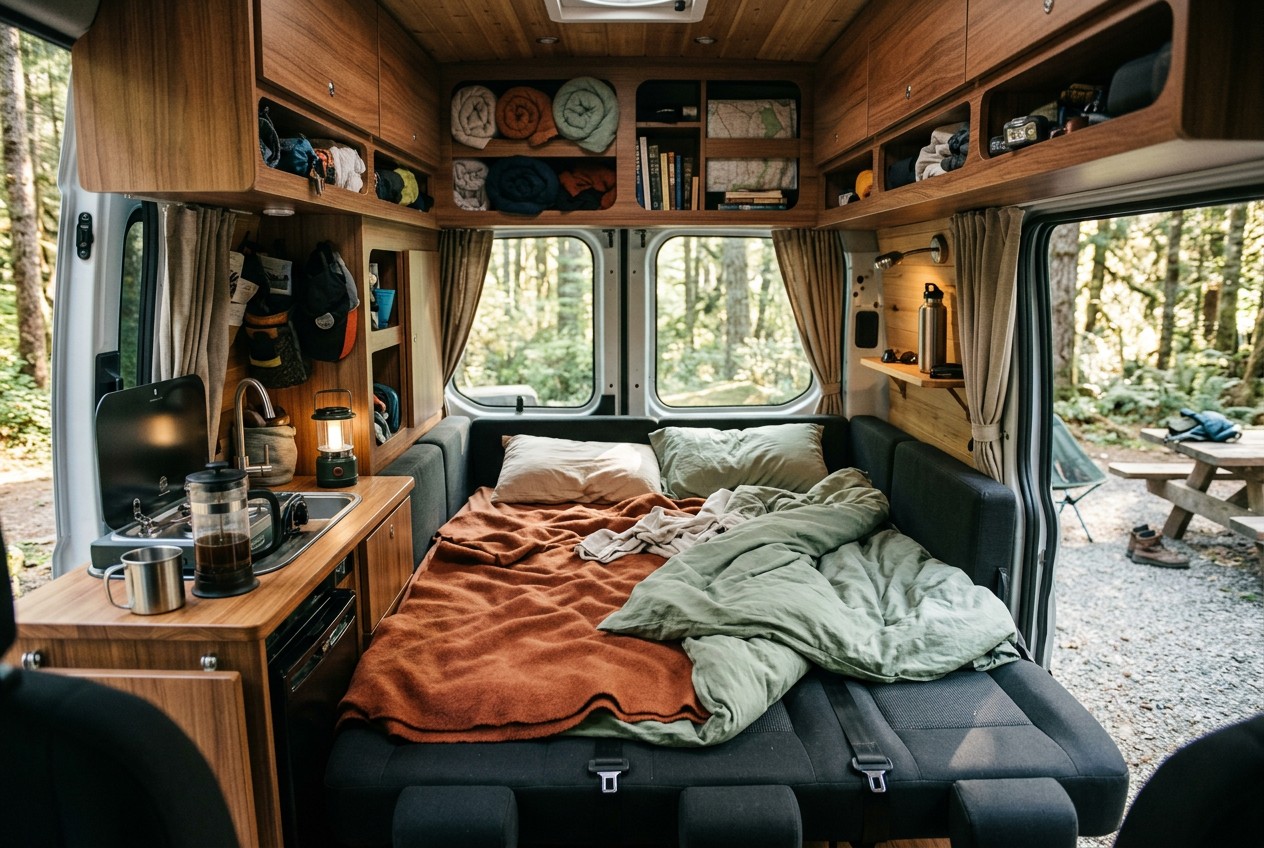
A Class B may advertise sleeping space for two to four people, but the practical capacity depends on bed dimensions and how the layout converts. Many camper vans turn a rear sofa or dinette into the main bed. This saves space during the day, but bedding must be removed, seats rearranged, and the bed rebuilt each night.
Some Class B models have a fixed rear bed, which simplifies the routine but reduces daytime living space. Measure the bed before booking. Beds labeled “double” or “queen” may be shorter or narrower than residential versions.
Class C motorhomes often provide more sleeping options:
- A cab-over bunk
- A fixed rear bed
- A convertible dinette
- A sofa bed
- Bunk beds in some family layouts
More listed beds do not always mean comfortable space for the stated number of adults. Check weight limits, ladder access, privacy, mattress dimensions, and the amount of floor space remaining when every bed is open.
Legal Passenger Capacity and Car Seats
Sleeping capacity is not passenger capacity. An RV that sleeps six may have fewer approved travel seats, and a dinette bench or sofa is not automatically suitable for every passenger.
Ask the provider to confirm:
- The number and location of seat belts
- Whether each belt is lap-only or lap-and-shoulder
- Which seats face forward
- Available car-seat and booster-seat attachment points
- Any restrictions on using child restraints
Never allow passengers to ride in beds, the cab-over bunk, or unbelted seating while the RV is moving. Car-seat compatibility and legal requirements vary by vehicle and state, so confirm current rules with the provider and relevant state authorities before booking.
Luggage, Outdoor Gear, and Pets
Class B storage usually favors soft bags and compact gear. Cabinets may be shallow, aisle space limited, and bulky suitcases difficult to store once the bed is assembled.
A Class C commonly offers larger interior cabinets and exterior compartments for chairs, strollers, pet supplies, and longer-trip luggage. Bikes may still require an approved rack or separate storage arrangement.
Before choosing, list every bulky item and ask for compartment dimensions. If traveling with a pet, also check floor space, ventilation, temperature control, cleaning rules, and any applicable pet charges directly with the provider.
Bathrooms, Kitchens, Tanks, and Campground Comfort
Wet Bath vs Dry Bath
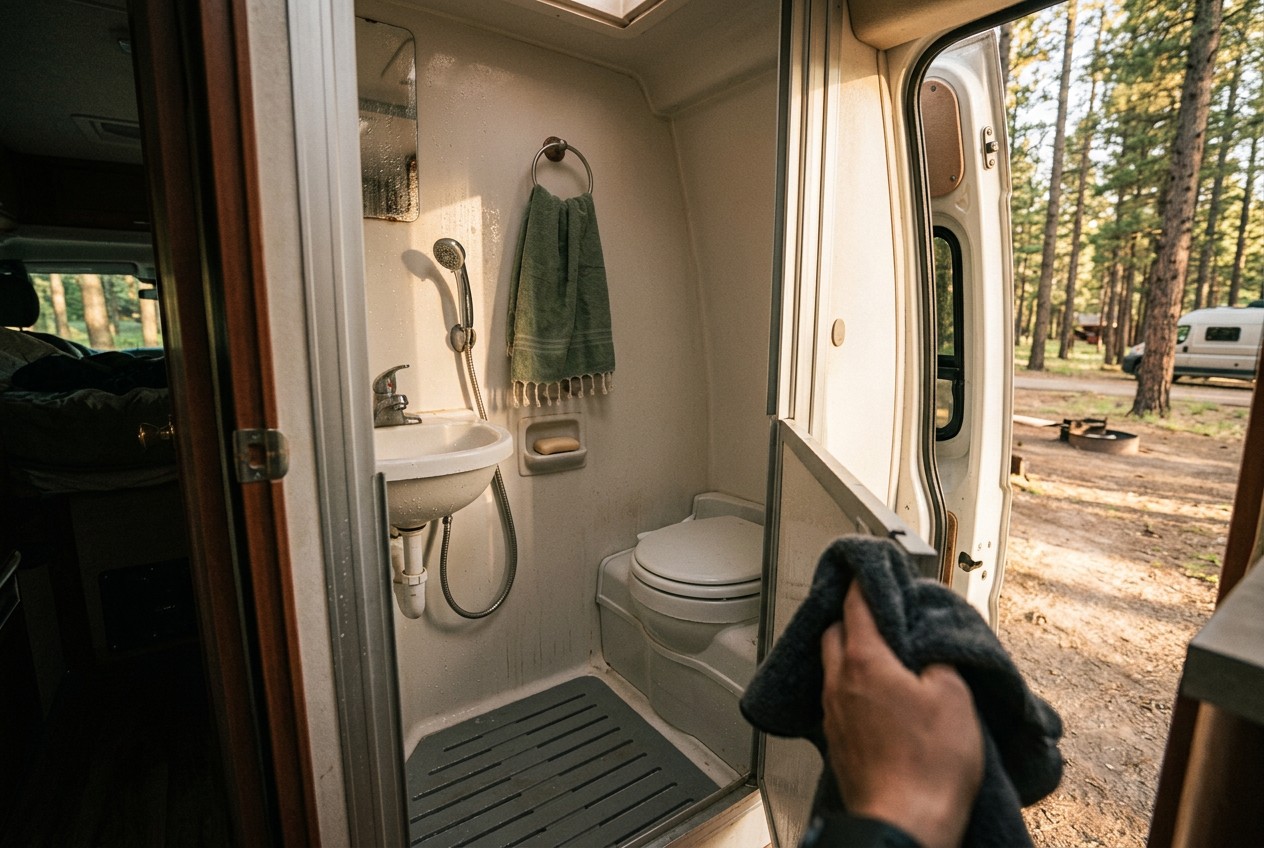
A wet bath combines the shower, toilet, and sometimes the sink in one waterproof compartment. It saves space, so it is common in Class B camper vans. The downside is daily cleanup - the toilet, walls, and floor may need wiping or drying after each shower.
A dry bath keeps the shower separate from the toilet area. Class C motorhomes are more likely to offer this layout, making the bathroom easier to share and keeping clothing and toiletries dry. Check the actual shower dimensions, ventilation, hot-water capacity, and privacy. A larger-looking bathroom may still feel cramped once the door is closed.
Kitchenette, Appliances, and Living Space
Class B kitchenettes typically include a compact refrigerator, sink, cooktop, and limited counter space. Cooking often requires moving cutting boards, dishes, or bedding. A Class C may add a larger refrigerator, oven or microwave, more cabinets, and a dedicated dinette.
Confirm which appliances can run from shore power, propane, batteries, or the generator. Generator use may be limited by campground quiet hours or the rental’s included-hour allowance.
Some Class C layouts use a slide-out to expand the dining or sleeping area. It improves campsite comfort but requires setup time and exterior clearance. Ask how to operate it, whether the RV must be level, and what to do if it fails to retract.
Fresh, Gray, and Black Water Capacity
The three main tanks serve different purposes:
- Fresh water supplies sinks, showers, and the toilet.
- Gray water holds wastewater from sinks and showers.
- Black water stores toilet waste.
Tank size matters more when camping without hookups. More travelers mean faster fresh-water use and more frequent gray- and black-tank dumping. Even a large tank can fill quickly when several people take full showers or wash dishes normally.
Full hookups can provide water, electricity, and sewer service, reducing tank constraints during longer stays. Partial hookups may provide only electricity and water. Before booking, confirm tank capacities, approved dump procedures, included hoses and adapters, generator operation, and any required dumping or cleaning charges directly with the provider.
Class B vs Class C RV Rental Costs
The lowest advertised nightly rate is not necessarily the lowest-cost rental. A smaller Class B can list at a similar or higher rate than some Class C motorhomes because pricing reflects demand, vehicle age, location, amenities, floor plan, season, and available supply - not size alone.
Nightly Rate vs All-In Trip Cost
The nightly rate covers the rental period, but it may exclude required or usage-based charges. Compare the complete trip total:
Base rental + mileage + generator use + protection + taxes + fees + fuel + campgrounds
For example, a lower-rate Class C may cost more overall if it uses more fuel or includes fewer miles. A higher-rate Class B could be less expensive for a long driving route if it has a better mileage allowance and lower fuel consumption. The result can reverse for a family that would otherwise need a second vehicle, extra campsite, or hotel room.
Review listings through the RV Rental Compass directory, Class B rental page, and Class C rental page. Use the RV rental cost guide to identify commonly overlooked expenses.
Itemized Rental-Cost Checklist
Request a written quote showing each of these items:
- Nightly rate and minimum rental period
- Included mileage and the charge for excess miles
- Included generator hours and the hourly overage rate
- Required insurance or protection plan
- State and local taxes
- Booking, service, preparation, or administrative fees
- Cleaning charge and conditions that trigger additional cleaning fees
- Delivery and setup charges, if offered
- Campground fees and hookup costs
- Pet, kitchen-kit, bedding, bike-rack, or other equipment charges
- Fuel, propane, tolls, and dumping responsibilities
- Refundable security deposit, payment timing, and refund conditions
A refundable deposit affects the amount charged or authorized before departure, even though it is not part of the final cost when returned in full. Ask what deductions may apply and how quickly eligible funds are released.
How to Compare Quotes Fairly
Enter the same assumptions into the RV trip cost calculator:
- Use identical travel dates and pickup times.
- Estimate the same route and total mileage.
- Apply each rental’s included-mile allowance.
- Estimate fuel using the specific vehicle’s expected MPG.
- Include likely generator hours and campground hookups.
- Add the same optional equipment and pet needs.
- Separate refundable deposits from nonrefundable trip costs.
Before booking, confirm the current itemized total, mileage and generator rules, cancellation terms, deposit refund conditions, return requirements, and protection-plan details directly with the owner or fleet. Prices and policies vary by vehicle, provider, and location.
Which RV Class Fits Your Trip?
Match the RV to the trip you will actually take. Group size matters, but so do driving frequency, parking plans, luggage, pets, weather, and the number of nights spent at one campsite.
| Trip style | Usually better fit | Why |
|---|---|---|
| Couple changing locations daily | Class B | Easier parking and simpler maneuvering |
| Family needing separate beds | Class C | More sleeping and storage space |
| Frequent city stops | Class B | More practical on tighter streets and lots |
| National park road trip | Class B or compact Class C | Depends on road, parking, and campsite limits |
| Extended campground stay | Class C | More indoor room and often a larger bathroom |
| Bulky luggage or pet gear | Class C | More cabinets and exterior storage |
Search the RV Rental Compass directory to compare exact floor plans near your route.
Choose a Class B for Mobility and Simplicity
A Class B camper van is usually the stronger choice for one or two travelers who move frequently, visit towns, and pack lightly. It is also useful when the route includes trailheads, small fuel stations, or campgrounds with shorter sites.
The tradeoff is compact living. You may need to rebuild the bed nightly, use a wet bath, limit luggage, and keep pet supplies out of the aisle. Confirm the vehicle’s actual height because rooftop equipment can restrict garage and canopy access.
Choose a Class C for Space and Group Comfort
A Class C motorhome often suits families, longer stays, and travelers who want separate sleeping areas. A cab-over bunk, fixed rear bed, larger refrigerator, dry bath, and exterior compartments can make daily routines easier.
Choose carefully if the route includes city centers or narrow park roads. Verify the length, width, height, turning clearance, campsite fit, and slide-out space for the specific vehicle.
Pre-Booking Walkthrough Checklist
Before accepting the RV:
- Measure beds and test every conversion.
- Confirm approved seat belts and compatible car-seat positions.
- Check storage for luggage, outdoor gear, and pet supplies.
- Test the refrigerator, cooktop, outlets, lights, heating, and air conditioning.
- Review fresh, gray, and black water operation.
- Confirm required campground hookups and included adapters.
- Start the generator and review included-hour limits.
- Operate the slide-out and confirm clearance requirements.
- Inventory hoses, cords, kitchen equipment, linens, and safety gear.
- Photograph existing damage and record fuel, propane, mileage, and tank levels.
- Confirm cleaning, dumping, refueling, return-time, and deposit requirements in writing.
Always verify current equipment, passenger rules, fees, and provider terms for the exact rental before booking.
Class B vs Class C RV FAQ
Is a Class B or Class C Easier to Drive?
A Class B is generally easier to drive because its van-based body is shorter and narrower. It usually offers simpler parking, tighter turns, and better maneuverability in cities, fuel stations, and crowded campgrounds.
A Class C requires more awareness of its width, height, rear overhang, and turning radius. Visibility can also differ from a passenger vehicle. Before departure, confirm the exact dimensions and practice braking, backing, and turning in an open area.
Do You Need a Special License to Rent Either Class?
Many renters use a standard driver’s license for Class B and Class C RVs, but this is not universal. Requirements can depend on vehicle weight, state law, license status, rental location, and provider policy.
Confirm current licensing and minimum-age requirements directly with the rental provider and relevant state motor vehicle agency. Also check whether additional drivers must be registered, approved, or covered by the insurance or protection plan.
Which Is Better for Couples or Families?
A Class B often works well for couples who value easy driving, frequent stops, and compact campsites. A Class C is usually more practical for families because it can provide separate beds, a cab-over bunk, more storage, and greater indoor living space.
Do not choose only by the advertised sleeping capacity. Verify bed dimensions, approved travel seats, seat-belt locations, car-seat compatibility, bathroom layout, and luggage space.
Compare exact floor plans and itemized quotes before booking. Dimensions, equipment, fees, laws, and provider policies vary by vehicle and location, so confirm all current terms directly with the provider.
RV safety: Before departure, learn the vehicle’s emergency procedures and confirm that the smoke, propane, and carbon monoxide detectors, fire extinguisher, emergency exits, tires, and seat belts are present and operational.
Carbon monoxide and fire safety: Never operate a generator in a garage, enclosed area, under a poorly ventilated shelter, or near doors, windows, vents, or other openings. Follow the rental provider’s instructions for all propane, fuel-burning, electrical, and generator equipment.
Waste-system hygiene: Empty gray and black water only at authorized disposal facilities. Wear disposable gloves, avoid splashes, wash your hands thoroughly, and keep sewer equipment separate from drinking-water hoses and fittings.
Food safety: Verify refrigerator temperature with a thermometer and keep perishable food at 40°F (4°C) or below. Discard food that may have remained above a safe temperature for too long.
Loading safety: Do not exceed the RV’s GVWR, axle ratings, tire ratings, towing limits, or hitch limits. Passenger, water, fuel, luggage, pet, and equipment weight all count toward the vehicle’s load.
Child and pet safety: Never leave a child or pet unattended in an RV. Interior temperatures can become dangerous quickly, and air conditioning or generator power can fail without warning.
Sources and verification
- NHTSA Vehicle Safety provides federal vehicle-safety resources and recall information to use when checking a specific RV.
- USA.gov state motor vehicle services links to official state agencies for licensing, registration and state-specific vehicle rules.
- CDC generator safety guidance supports the carbon-monoxide precautions for fuel-burning generators.
These sources support the vehicle-safety, state-rule and carbon-monoxide context above. They do not validate any rental rate, fee, vehicle, provider, availability, protection plan or specific policy; verify written terms directly.