What does travel trailer rental cost include?
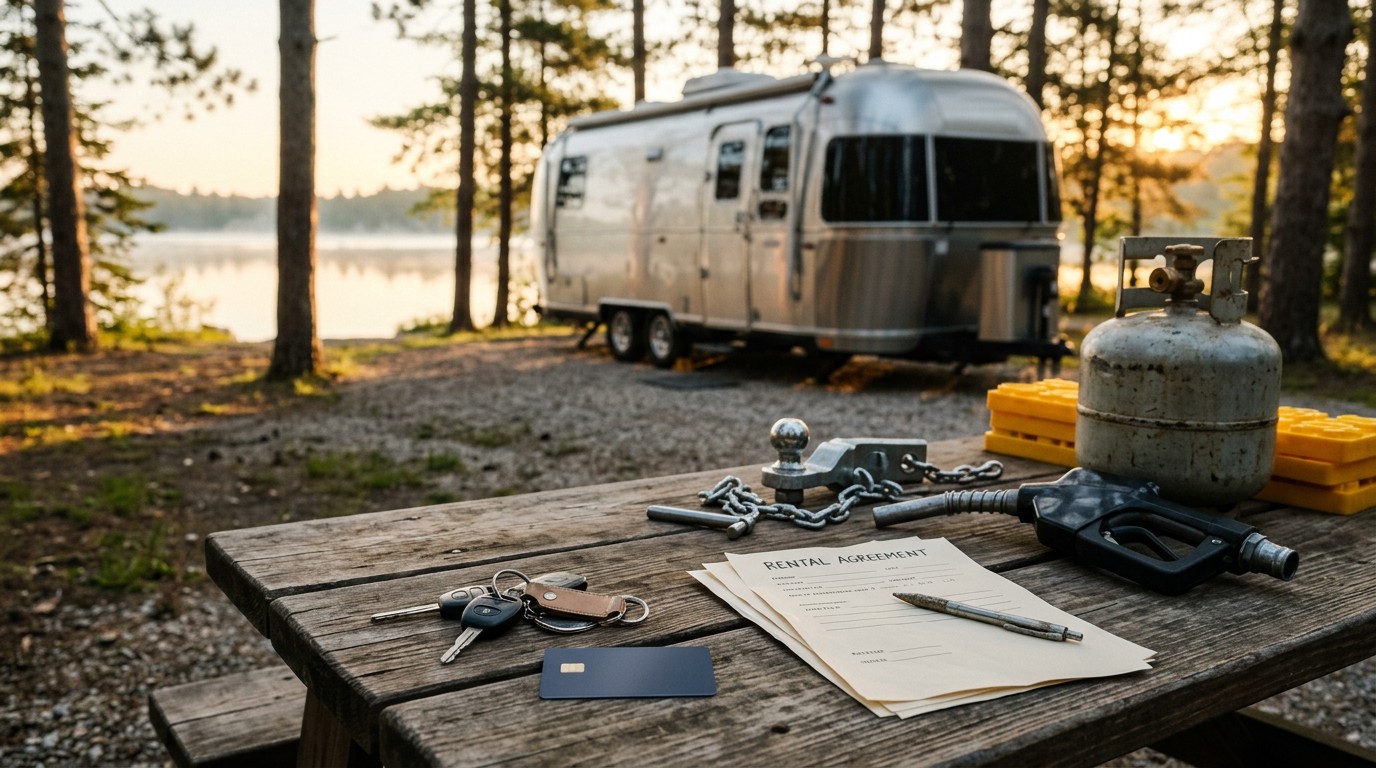
A travel trailer rental is often advertised at $50-$200 per night, but that figure usually represents only the base rate. The all-in trip cost may also include service and cleaning fees, taxes, insurance or a protection plan, delivery and setup, optional equipment, and disclosed overages. A refundable security deposit may increase the cash or available credit required without becoming a final expense if fully released.
Compare current travel trailer listings and review the RV Rental Cost Index, then request an itemized quote. Prices, inclusions, deposits, and policies vary by owner, fleet, and location, so confirm current terms directly with the provider before booking.
Travel trailers and other RV types
| RV type | Plain-English definition | Key cost distinction |
|---|---|---|
| Travel trailer | Towable RV attached behind a suitable vehicle | Renter may pay for towing equipment, fuel, or delivery |
| Fifth wheel | Large towable using a pickup-bed hitch | Requires a compatible truck and hitch |
| Pop-up camper | Lightweight folding trailer | Often smaller, with fewer amenities |
| Class A | Large bus-style motorhome | Includes driving-related fuel and possible mileage charges |
| Class B | Camper van | Compact motorized RV |
| Class C | Motorhome with a truck-style cab | Motorized, often with an over-cab sleeping area |
Do not automatically apply motorhome mileage, fuel, or generator assumptions to a towable trailer. Generator charges matter only if one is supplied, while mileage fees may relate to delivery rather than trailer use.
Nightly, weekly and monthly travel trailer rental rates
What affects the nightly rental rate?
The advertised nightly rate can change by trailer size, age, sleeping capacity, floor plan, and amenities. A newer bunkhouse with a full kitchen and room for eight may cost more than an older compact trailer for two. Rental dates matter too. Seasonal demand, weekends, holidays, special events, and local supply can affect pricing without changing the trailer itself.
| Pricing factor | What to compare |
|---|---|
| Size and capacity | Beds, seating, bathroom, storage, and loaded weight |
| Age and condition | Model year, maintenance, and included equipment |
| Amenities | Air conditioning, kitchen equipment, linens, outdoor gear, or generator |
| Dates and location | Seasonal pricing, local demand, and available inventory |
| Rental rules | Minimum stay, pickup times, and cancellation terms |
A $90 advertised rate does not necessarily mean a three-night trip costs $270. A provider may require four nights, charge higher weekend rates, or add service fees, cleaning, taxes, and a protection plan. Compare the itemized total on current RV listings, not just the lowest rate displayed in search results.
Weekly and monthly rental rate discounts
A weekly or monthly rental rate may reduce the effective price per night. For example, seven nights at a standard $120 rate would equal $840 before fees. A provider might offer a lower weekly total, but the actual discount and eligibility vary.
| Stay length | Cost details to verify |
|---|---|
| 3 nights | Minimum stay and fixed fees |
| 7 nights | Weekly discount and included dates |
| 14 nights | Whether weekly pricing applies twice |
| 30 nights | Monthly rate, usage limits, and cleaning terms |
Fixed charges can weaken the apparent savings. Delivery, setup, cleaning, insurance or protection, taxes, and optional extras may not decline with the nightly rate. Longer rentals can also create more propane use, campground nights, and tow-vehicle fuel costs.
Before booking, confirm the current itemized quote, minimum rental period, discount rules, deposit, cancellation policy, and all mandatory charges directly with the provider.
How to calculate the all-in trip cost
Start with the advertised nightly rental rate, then add every required and optional charge:
All-in trip cost = nightly rate x billable nights + mandatory fees + taxes + insurance or protection + delivery and setup + optional add-ons + overages
Use the number of billable nights, which may be higher than the planned stay if a minimum rental period applies. For a clearer breakdown of common charges, review this guide to RV rental fees.
Mandatory fees, taxes and optional add-ons
| Charge | What it may cover | What to confirm |
|---|---|---|
| Service fee | Booking, platform, or administrative services | Whether it is fixed or percentage-based |
| Cleaning fee | Standard turnover after the rental | Required cleaning and tank-emptying rules |
| Delivery and setup | Transport, leveling, hookups, orientation, and pickup | Delivery radius and exactly which services are included |
| Insurance or protection plan | Certain covered damage or liability risks | Deductible, exclusions, limits, and roadside assistance |
| Sales and lodging taxes | Applicable state and local taxes | Taxable charges and current rate shown in the quote |
| Pet fee | Additional cleaning or pet accommodation | Whether pets require approval |
| Rental add-ons | Linens, kitchen kits, camp chairs, hitch equipment, or a generator | Whether each item is optional or already included |
Some charges are mandatory, while others depend on the provider, location, trailer, or renter’s choices. Never assume a cleaning fee includes dumping waste tanks or that delivery automatically includes campsite setup.
Possible overage charges
Potential overages should be included in the budget even if they are not due at checkout. They can include:
- Late return or missed pickup charges
- Excess cleaning or improper tank-return charges
- Damage, missing equipment, or unauthorized pet charges
- Generator-hour overages when a generator is supplied
- Delivery mileage beyond an included radius
- Propane or other usage charges disclosed in the agreement
A towable RV is not driven like a Class A, Class B, or Class C motorhome, so a traditional mileage allowance may not apply. Any mileage charge could instead relate to delivery or another service. Generator hours matter only when the rental includes a generator. Confirm included usage and overage rates directly with the provider.
Security deposits and booking cash flow
A refundable security deposit or card authorization is generally separate from the final trip expense if it is released in full. It still increases the cash or available credit needed at booking or pickup.
Deductions may apply for documented damage, missing items, late return, excess cleaning, unemptied tanks, or other agreement violations. Ask when the hold is placed, how long release may take, and what documentation is used for deductions.
Before booking, compare the current itemized quote, cancellation terms, deposit conditions, and all mandatory or possible charges directly with each provider.
Cost examples for 3 days, one week, two weeks and one month
These examples use a hypothetical $120 nightly rate, not a market quote. Assumptions include a 10% weekly discount, 15% two-week discount, and 25% monthly discount, plus $175 for service and cleaning, an $18-per-night protection-plan placeholder, $250 for delivery and setup, and $50 in optional extras. An illustrative 8% tax is applied only to discounted base rent.
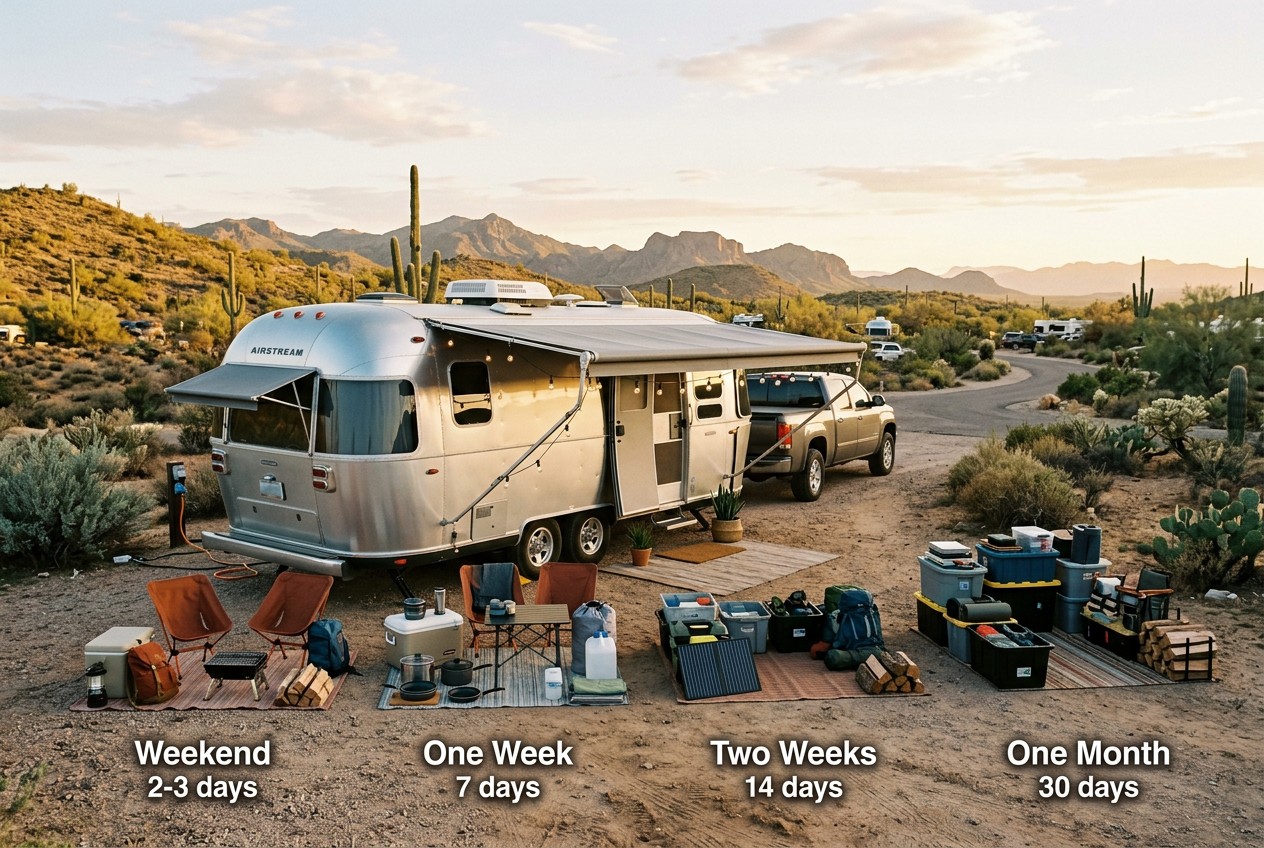
| Rental period | Discounted base rent | Other charges and tax | Estimated total | Effective cost per night |
|---|---|---|---|---|
| 3 nights | $360 | $558 | $918 | $306 |
| 7 nights | $756 | $661 | $1,417 | $202 |
| 14 nights | $1,428 | $841 | $2,269 | $162 |
| 30 nights | $2,700 | $1,231 | $3,931 | $131 |
These totals exclude campground reservations, tow-vehicle fuel, propane, dumping, food, and supplies. They also exclude any refundable security deposit or card authorization, which affects required cash or available credit but is not normally a final expense if fully released.
Short trip planning examples
A three-night rental has only $360 in base rent, yet fixed charges raise the example total to $918. If the provider requires a four-night minimum, the renter could owe four billable nights even when using the trailer for only three. Service, cleaning, and delivery charges also get spread across fewer nights, producing a higher effective daily cost.
Extended rental planning examples
Weekly and monthly discounts can reduce the base rate per night, but the total does not fall at the same pace. Protection-plan charges may increase with every rental night. Taxes, delivery, setup, cleaning, and optional equipment can remain payable even after a longer-stay discount is applied.
Use these figures only as budgeting illustrations. Tax treatment, discount rules, minimum stays, protection costs, delivery pricing, and included equipment vary by provider and location. Compare current listings and the RV Rental Cost Index, then replace every estimate with a current itemized quote and confirm all terms directly before booking.
Tow vehicle requirements and towing costs
A suitable tow vehicle affects rental eligibility, safety, and the final trip budget. Before reserving a travel trailer, give the provider your vehicle’s year, make, model, drivetrain, and towing equipment. Confirm every limit with the rental provider, vehicle manufacturer, and a qualified towing professional.
Towing capacity, GVWR and loaded trailer weight
Towing capacity is the maximum trailer weight the manufacturer permits a specific vehicle configuration to pull. Engine, axle ratio, drivetrain, factory tow package, and installed equipment can change that limit.
Gross vehicle weight rating, or GVWR, is the maximum permitted loaded weight of a vehicle or trailer. A trailer’s GVWR includes the trailer itself plus water, propane, food, luggage, and other cargo.
Do not compare towing capacity only with the trailer’s dry weight, which generally excludes some or all cargo and consumables. Use the expected loaded trailer weight, and confirm what the quoted dry weight includes.
| Figure | Why it matters |
|---|---|
| Tow vehicle towing capacity | Limits how much trailer the vehicle may pull |
| Trailer dry weight | Starting figure, not the expected trip weight |
| Trailer GVWR | Maximum permitted loaded trailer weight |
| Loaded trailer weight | Reflects cargo, water, propane, and supplies |
Tongue weight and payload capacity
Tongue weight is the downward force the trailer places on the hitch. It counts against the tow vehicle’s payload capacity, along with passengers, luggage, pets, cargo, and hitch hardware.
A vehicle can appear to have enough towing capacity yet exceed its payload limit once everyone and everything is loaded. Check both limits using the vehicle’s manual and certification labels, then have the proposed combination reviewed when necessary. Do not assume a vehicle advertised to tow a certain amount can handle every trailer below that number.
Hitch equipment, brakes and fuel use
Ask the provider to identify all required equipment before pickup:
- Correct hitch receiver and properly rated hitch components
- Compatible ball size and mount
- Safety chains and breakaway connection
- Matching electrical connector
- Brake controller when required for the trailer and setup
- Weight-distribution or sway-control equipment when specified
Determine what is included, what can be rented, and what must be professionally installed. Equipment rental or installation can increase the all-in trip cost and may require advance scheduling.
Towing also typically increases fuel consumption. Budget for more tow-vehicle fuel than the same route would require without a trailer, especially with a heavier unit, higher speeds, hills, wind, or frequent stops.
Policies and equipment requirements vary by trailer, provider, vehicle, and location. Confirm the approved tow vehicle, loaded-weight limits, hitch setup, brake equipment, roadside assistance, and itemized charges directly before booking.
Pickup versus delivered RV rental
Pickup means towing the trailer from the provider to the campground. A delivered RV rental is transported to the campsite, set up, and collected later. Delivery adds convenience, but its fee increases the all-in trip cost beyond the advertised nightly rate.

When pickup may cost less
Pickup can avoid delivery and setup charges if you already have:
- A provider-approved tow vehicle with adequate towing and payload capacity
- Compatible hitch equipment, wiring, and brake controller
- Confidence towing, backing, and leveling the trailer
- Enough time to meet pickup and return appointments
Include hitch rental or installation, additional tow-vehicle fuel, and possible schedule changes when comparing costs. Pickup is not necessarily cheaper if you must obtain equipment or use a different vehicle.
What a delivery quote should cover
Ask whether the quoted fee includes:
- Transportation to and from the campground
- Leveling and stabilizing the trailer
- Water, sewer, and electrical hookups
- An operating orientation
- Final collection after checkout
Confirm the delivery radius, campsite access requirements, and charges for extra distance. Some campgrounds have narrow roads, gate hours, site-length limits, or setup rules that affect delivery. After installation, the provider may prohibit moving the trailer. Verify this before planning side trips or campsite changes.
Mileage and generator charges for towables
A travel trailer is not driven like a Class A, Class B, or Class C motorhome, so a standard mileage allowance may not apply. Mileage charges on a delivered trailer may instead cover the provider’s transport distance or another service.
Generator-hour charges matter only when a generator is supplied. Confirm whether one is included, how many hours are allowed, the overage rate, fuel responsibility, and campground generator restrictions.
Prices and policies vary by owner, fleet, campground, and location. Compare pickup and delivery using the current itemized quote, then confirm setup, collection, mileage, generator use, taxes, deposits, and cancellation terms directly with the provider.
Insurance, protection and costs outside checkout
Protection purchased during booking is only one part of the risk and trip-cost picture. The checkout total may exclude important coverage and several road-trip expenses.
Rental insurance and protection plan details
Rental insurance may be an insurance policy, while a protection plan may be a contractual damage-coverage product with different terms. Your personal auto or RV policy is separate. None should be assumed to cover every rented trailer, tow vehicle, driver, or incident.
Review the RV rental insurance guide and verify these details before booking:
- Damage coverage for the rented trailer
- Coverage for the tow vehicle and hitch equipment
- Liability limits and eligible drivers
- Deductibles and renter responsibility
- Exclusions for misuse, prohibited roads, weather, theft, or personal property
- Roadside assistance for both the trailer and tow vehicle
- Procedures and deadlines for reporting damage
Ask the rental provider for current plan documents, then confirm existing coverage directly with your insurer. A low protection-plan price can still leave substantial out-of-pocket exposure if the deductible is high or a loss is excluded.
Campground, fuel, propane and supplies
Several costs contribute to the trip budget without appearing in the rental transaction:
- Campground fees and reservation charges
- Electrical, water, sewer, or other campsite utility charges
- Additional tow-vehicle fuel caused by towing
- Propane refills
- Waste-tank dumping
- Food, cookware, linens, toiletries, and camping supplies
Delivery does not necessarily include campground charges, hookups, propane, or tank service. Likewise, a cleaning fee may not cover dumping or returning propane to the required level.
Add these expenses to the itemized rental quote when estimating the all-in trip cost. Prices, coverage, inclusions, and policies vary by provider, insurer, campground, and location, so confirm current terms directly before booking.
Travel trailer rental cost FAQ and quote checklist
What should you compare in an itemized quote?
Compare each quote line by line:
- Base rate, billable nights, minimum stay, and weekly or monthly discounts
- Included hitch equipment, linens, kitchen supplies, and other add-ons
- Delivery distance, setup, orientation, hookups, and collection
- Cleaning standards, waste-tank requirements, and propane responsibility
- Pet fees, mileage terms, and generator hours if a generator is supplied
- Insurance or protection costs, deductibles, exclusions, and roadside assistance
- Taxes, refundable deposit or card hold, cancellation terms, and possible overages
Confirm which charges are mandatory. A refundable deposit is not normally a final trip cost when fully released, but it affects the cash or available credit needed.
How much is a travel trailer per day, week, or month?
The commonly advertised base rate is $50-$200 per night before fees. Actual weekly, two-week, and monthly prices depend on discounts, minimum stays, seasonal demand, and fixed charges.
Using the earlier hypothetical $120 nightly rate and disclosed assumptions, estimated all-in totals were $918 for three nights, $1,417 for one week, $2,269 for two weeks, and $3,931 for 30 nights. These are planning examples, not current quotes. Check travel trailer listings and the RV Rental Cost Index for updated comparisons.
What is the cheapest way to rent a travel trailer?
Look for off-peak dates, smaller or older trailers, longer-stay discounts, and only the add-ons you need. Pickup may cost less than delivery if you already have an approved tow vehicle, adequate towing and payload capacity, and compatible hitch equipment.
Delivery often adds a separate transport and setup charge, but it may eliminate the need to tow. If picking up, you need a suitable provider-approved tow vehicle. Confirm the current itemized quote, cancellation policy, deposit, and all terms directly before booking.
Towing safety: Never exceed the tow vehicle, trailer, hitch, axle, tire, or payload ratings. Verify the fully loaded combination, required braking equipment, licensing requirements, and applicable towing laws before travel. If compatibility or setup is uncertain, consult the rental provider and a qualified towing professional.
Generator safety: Never operate a generator inside a trailer, vehicle, tent, garage, or other enclosed or partially enclosed occupied area. Follow the generator manufacturer’s ventilation, clearance, fueling, carbon-monoxide, fire-safety, and campground requirements.
Propane, electrical, and sanitation safety: Follow the rental provider’s orientation, equipment manuals, and campground rules when using propane appliances, electrical hookups, water systems, or waste tanks. Stop using equipment if you smell gas, detect damage, or are unsure of the setup, and obtain qualified assistance. Use appropriate gloves and hygiene practices when handling sewer connections or waste tanks.
First-time renters should obtain hands-on instruction before coupling, towing, backing, leveling, or connecting a travel trailer. Consider professional delivery and setup if you do not have suitable equipment or towing experience.